 ·
4 minute read
The Brief: Canva has introduced Canva Research, its in-house AI research and development lab, alongside Canva Craft, its first image generation foundation model developed and trained from scratch.
Canva Research brings together more than 160 AI scientists and engineers, building on investments in machine learning, generative AI, and design technology dating back to 2017.
Meanwhile, Craft generates images at up to 2K resolution, supports more than 30 aspect ratios, and can produce text in 55 languages. Its two-stage architecture separates composition planning from image rendering, supporting more precise image generation and editable outputs through Magic Layers.
Craft is available globally through Canva Dream Lab and the Public API, with Canva MCP integration coming soon.
Explore full details of the announcement about Canva Research and Canva Craft at canva.com.
 Source: Canva
Canva Research Introduces Canva Craft to Advance AI-Powered Design
Analyst Perspective: Canva is developing its AI capabilities with a clear connection to the creative software it has built over the past decade. Its investment in proprietary research gives the company more direct involvement in how AI models interpret design requirements, generate visual content, and support editing. This is particularly relevant to a platform whose users produce everything from simple social graphics to complex business presentations.
The introduction of Canva Research also gives the company an internal organization responsible for advancing these capabilities. Its accumulated experience with templates, visual assets, and user-generated content provides a foundation for developing technology suited to specific creative tasks.
This is an important development in Canva's product strategy because it extends the company's involvement in AI from integrating existing technologies to developing its own models. Craft provides an early example of how that investment can translate into a product capability with applications across its existing software and external developer ecosystem.
 Source: Canva
Bringing Composition Planning Into Image Generation
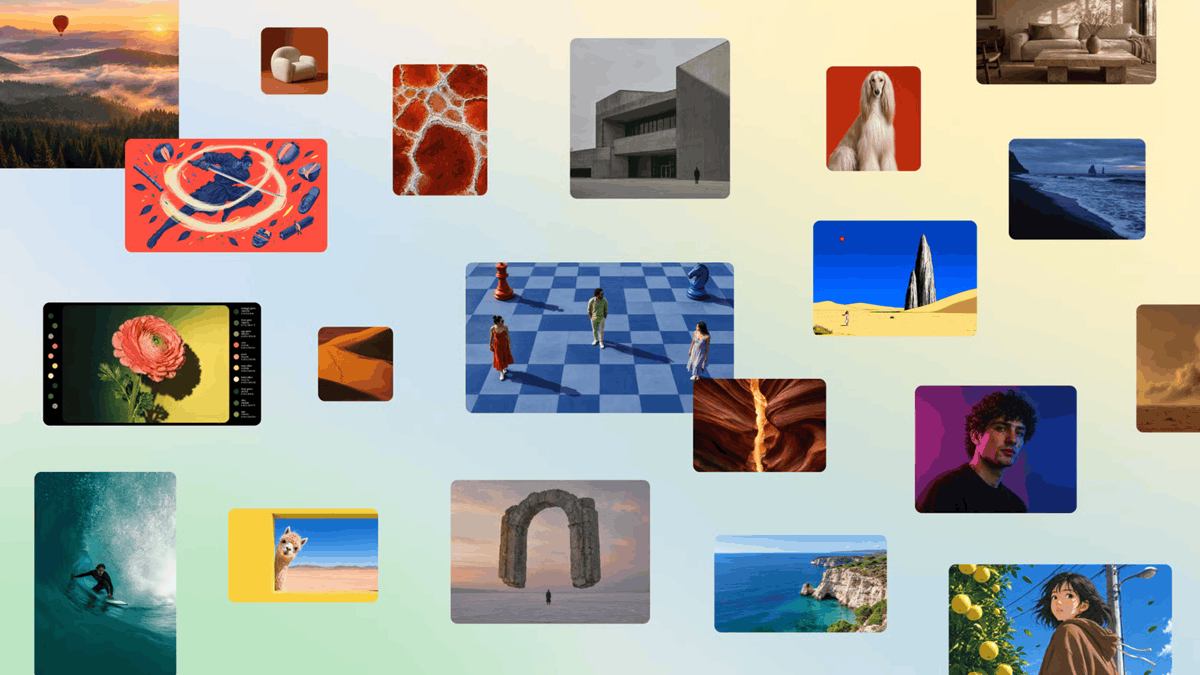
Canva Craft introduces a two-stage image generation system that separates planning from rendering. Its first model interprets a prompt and develops a composition plan covering the visual elements, their placement, relative sizes, relationships, and required text. A second model then renders the image at resolutions up to 2K.
This design gives Craft greater control over how individual components appear in the finished image. It can generate complex layouts with more accurate typography, object placement, and visual hierarchy, while supporting targeted modifications without unnecessarily changing other elements.
Craft also supports more than 30 aspect ratios, which allows users to generate images for different content formats, including social media graphics, posters, and banners. Users can write prompts in any language, while the model supports text generation in 55 languages.
Its architecture also supports integration with Magic Layers, which converts generated images into editable design elements.
 Source: Canva
Developing Specialized Models for Creative Workflows
Canva Research builds on the company's earlier investments in machine learning and AI. Its initial work began in 2017 with search and recommendation capabilities for Canva's template library. The 2021 acquisition of Kaleido brought Background Remover technology into the platform, followed by the acquisition of Leonardo in 2024.
Canva subsequently welcomed MangoAI and Simtheory, adding expertise in reinforcement learning and AI agents. These developments contributed to the formation of Canva Research in 2025, which now comprises more than 160 AI research scientists and engineers within a wider AI unit of 400 people.
Its development work includes Magic Layers, image generation models, and Image to Video technology. For the latter, Canva improved existing open-weight models using proprietary data, achieving 70% more video generations per GPU hour. Leonardo's Lucid Origin also forms part of its image generation portfolio, offering high-definition native image generation with reduced costs.
Using Designer Feedback to Improve Image Quality
Canva trained Craft using millions of human-created templates from its content library. These include posters, presentations, social media graphics, menus, and infographics. The training materials give the model examples of how typography, spacing, composition, and visual hierarchy work within finished designs.
Following pre-training, Canva used supervised fine-tuning and reinforcement learning to improve instruction following, typography accuracy, and visual quality. Professional designers also participated in internal evaluations, comparing more than 25,000 pairs of images against competing models. When automated assessments differed from human evaluations, Canva prioritized designer feedback.
Craft debuted as the fourth most advanced image generation model on DesignArena. It also ranked first globally in People and Portraits and Landscapes and Nature, second in Abstract and Patterns, and fourth in Products. These rankings provide an indication of its performance across different image categories.
Extending Craft Access Through Dream Lab and Developer Tools
Canva is making Craft available through its existing design platform and external development channels. Canva users can access the model through Dream Lab, while developers and product teams can integrate its image generation capabilities through the Public API.
The API gives external applications access to Craft, with potential uses in marketing platforms, e-commerce websites, advertising tools, and print services. This allows developers to test the model using their own prompts and incorporate image generation into existing products.
Canva MCP integration is also planned, connecting Craft with AI assistants and automated workflows. This would allow AI agents to generate visual assets, such as launch graphics, product images, and social media posts, as part of larger tasks.
For organizations already using Canva, these access options provide additional ways to incorporate AI-generated visuals into existing content production processes.
Canva Connects Proprietary AI Development with Its Creative Software Portfolio
Canva's investment in AI research builds on an established lineup of design, collaboration, and content creation tools. The company already provides users with templates, image editing, presentations, video creation, and AI-powered features. Developing proprietary models gives it an opportunity to improve these capabilities through technology designed around the requirements of its platform.
Craft addresses several familiar requirements in content production, including accurate text rendering, precise image composition, and the ability to edit generated visuals. These capabilities can benefit marketing teams, businesses, professional designers, and individual creators who regularly produce visual materials.
Where Further Development Will Matter
Maintaining consistent image quality across different prompts, languages, and creative categories will require continued model refinement. Canva has identified fine print and technical drawings as areas for improvement. More advanced editing controls, reference-image capabilities, and faster model variants could help address these requirements. Craft-fast and Craft-ultrafast are already in development, with the goal of reducing generation costs while retaining image quality.
Safety will also remain important as AI-generated content becomes more widely used. Canva Shield provides input and output moderation, privacy controls, safety evaluations, and reporting tools for potentially harmful or misleading material.
What to Watch From Canva
The introduction of Canva Research and Craft gives the company greater involvement in the technology powering its creative products. I expect its proprietary models to play an increasingly important role in how Canva develops image generation, video creation, and AI-assisted editing.
The next area to watch is how effectively Canva connects these capabilities across Dream Lab, Magic Layers, its Public API, and future MCP integrations. Success will depend on delivering consistent outputs, responsive editing experiences, and dependable performance for different types of users. If Canva continues developing its models around actual design workflows, its research investments could strengthen its software portfolio while giving developers additional ways to incorporate its AI technology into their own products.
Transform market insights into practical strategy with expert research and analysis. Reach out to us at the Collab Collective to learn how our team can help guide your next decision.