
 ·
4 minute read
·
4 minute read
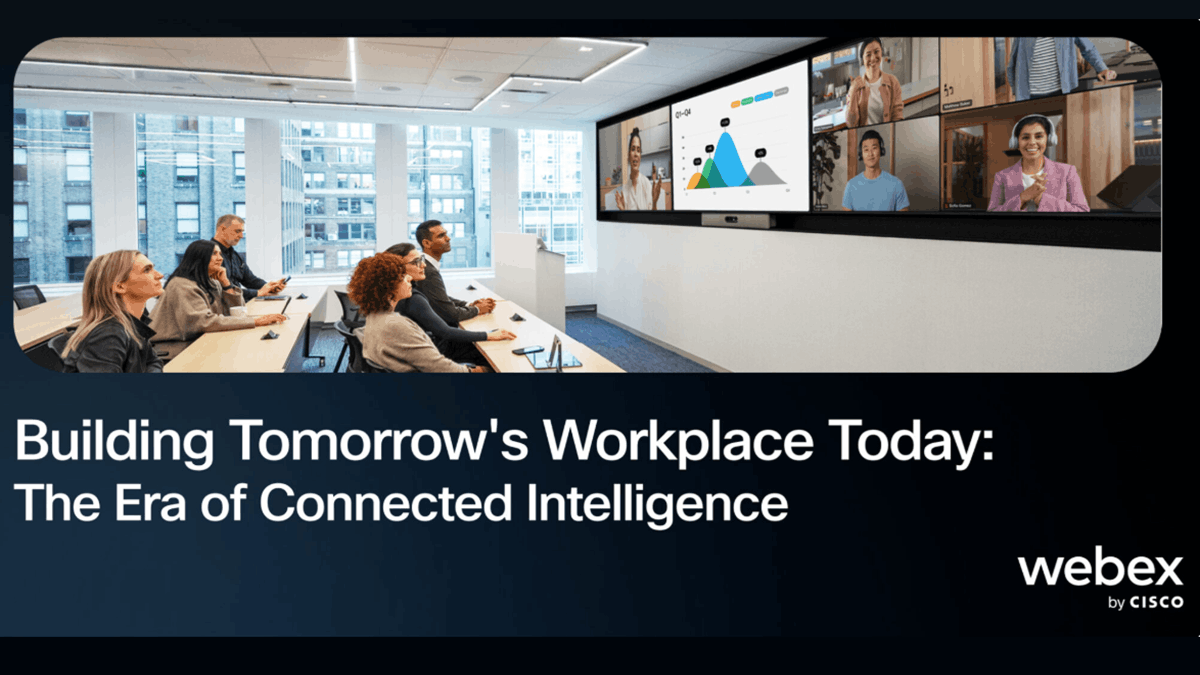
The Brief: At Cisco Live EMEA, Cisco outlined its latest direction for workplace technology, anchored in a framework it refers to as Connected Intelligence.
The announcements span intelligent workspaces, collaboration platforms, customer experience solutions, and infrastructure designed to support hybrid work at scale.
Cisco introduced updates to room and desk devices, including the Room Kit Pro G2 and Desk Pro G2, alongside new capabilities for frontline and mobile workers. The company also detailed deeper integrations across management, collaboration, and AI-driven workflows, with Control Hub acting as a unifying layer.
In parallel, Cisco shared enhancements to Webex collaboration, contact center capabilities, and hybrid deployment models, with an emphasis on security, data residency, and operational resilience.
Discover full details of the announcement about Connected Intelligence at blog.webex.com.
 Source: Cisco
Cisco Live EMEA Showcases the Evolution of Intelligent Work Experiences
Analyst Perspective: Cisco’s Connected Intelligence message at Cisco Live EMEA centers on alignment across spaces, tools, and management systems.
The company used the event to outline how updated room and desk devices, including the Room Kit Pro G2 and Desk Pro G2, fit into a broader effort to reflect how work actually happens across offices, homes, and frontline environments. This approach allows organizations to modernize collaboration without reworking their entire technology stack.
By tying these devices to platform-level updates across Webex and Control Hub, Cisco emphasized shared context and coordinated operations. Rather than treating meetings, calling, and management as separate functions, the updates point toward consistent experiences that are easier to deploy, support, and govern.
Taken together, the announcements suggest a practical path toward reducing operational friction while maintaining control as hybrid work continues to evolve.
 Source: Cisco
Intelligent Workspaces Designed for Real-World Collaboration
Cisco’s workspace updates embed intelligence directly into devices and rooms, helping align in-person and remote collaboration. The focus is on flexibility, simpler deployment, and consistent experiences across spaces and roles.
- Room Kit Pro G2: Designed to simplify complex setups in large, high-demand meeting rooms. It supports multiple cameras and uses AI to automatically frame speakers as discussions evolve, while streamlined deployment and room orchestration reduce ongoing management work.
- Desk Pro G2: For individual workstations and small group spaces, the Desk Pro G2 delivers a more flexible collaboration experience. A dual-lens camera captures both detailed and wide views, and features like one-cable docking, built-in whiteboarding, and fast setup make it easy to use across different settings.
- Wireless Phone 9821: Frontline teams benefit from the Wireless Phone 9821, which provides dependable Wi-Fi calling within existing communication systems. It is well suited for mobile roles in healthcare, retail, and manufacturing, where staying connected while on the move is part of the job.
Unified Management and Context-Aware Collaboration
Cisco’s platform updates focus on unifying management and collaboration through shared intelligence.
Control Hub integrates workspace data with conversational AI tools that fit existing IT and facilities workflows, allowing teams to manage, configure, and optimize environments without changing how they work day to day.
Meanwhile, Workspace Designer introduces 3D visualization for room planning and configuration, allowing teams to design and deploy spaces using Cisco devices and verified third-party displays. This capability aims to reduce guesswork during deployment and improve coordination across departments.
On the collaboration side, Cisco continues to align meetings, calling, and messaging into a single contextual experience. AI-driven assistance surfaces relevant information across conversations, reducing time spent searching for prior discussions or decisions.
 Source: Cisco
Enabling Multilingual and Context-Rich Collaboration
Cisco also highlighted advances designed to remove language and context barriers across global teams. These updates prioritize real-time understanding rather than post-meeting analysis.
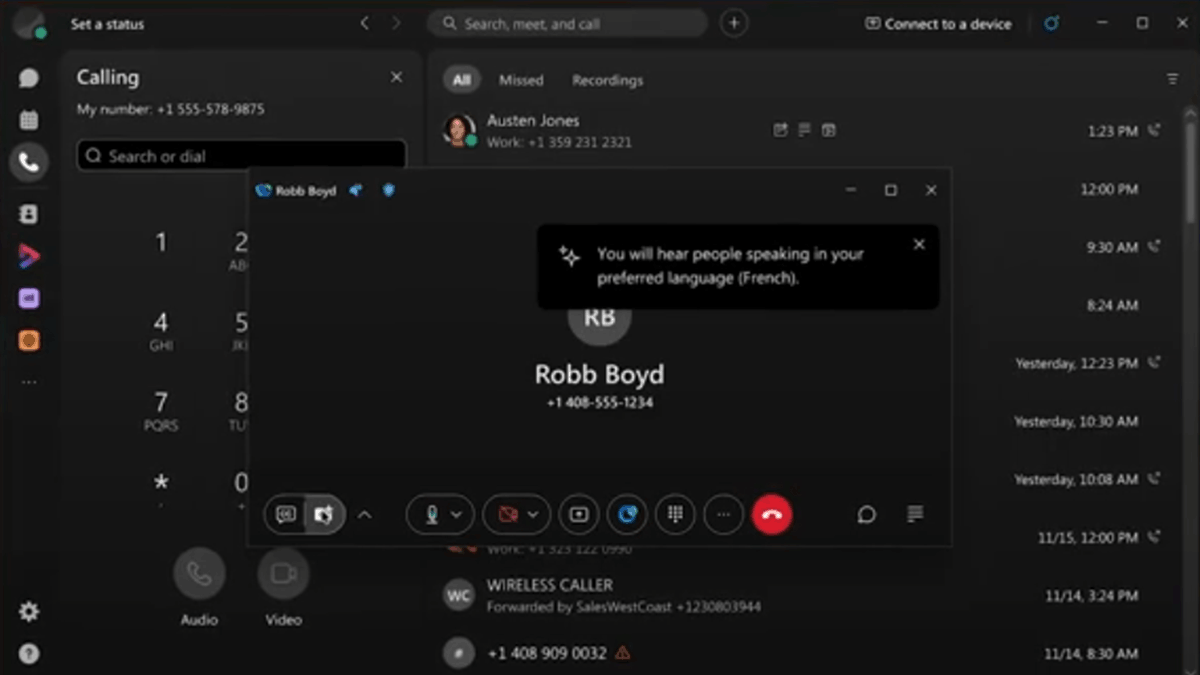
For instance, speech-to-speech translation allows participants to speak naturally in their own language while others hear a smooth, real-time translation. Because the translation is designed to preserve tone and intent, discussions feel more natural and less like talking through a machine. This enables global teams to collaborate without adjusting how they normally communicate.
At the same time, AI Assistant for Webex Calling helps keep conversations connected. Relevant details from earlier calls, meetings, and messages can surface during live discussions, which reduces the need to search through notes or transcripts later. Through integrations with enterprise search and productivity tools, this context follows the conversation instead of staying buried in separate systems.
Cisco also emphasized security as a foundational requirement for connected collaboration. Enhanced encryption across meetings and calls is designed to ensure that expanded intelligence does not come at the expense of trust or compliance, particularly for regulated industries.
 Source: Cisco
AI-Driven Customer Experiences and Workforce Optimization
In customer experience, Cisco positioned AI as a means of improving operational efficiency while preserving human judgment where it matters most. Updates to contact center capabilities focus on routing, workforce planning, and unified agent experiences.
AI-based routing uses context such as interaction history, intent, and agent availability to match customers with appropriate resources. This approach aims to reduce resolution times and improve consistency across channels.
Cisco also introduced native AI forecasting and scheduling tools that model real-time interaction data and dynamic scenarios. These capabilities are designed to help organizations plan staffing more accurately as customer demand fluctuates.
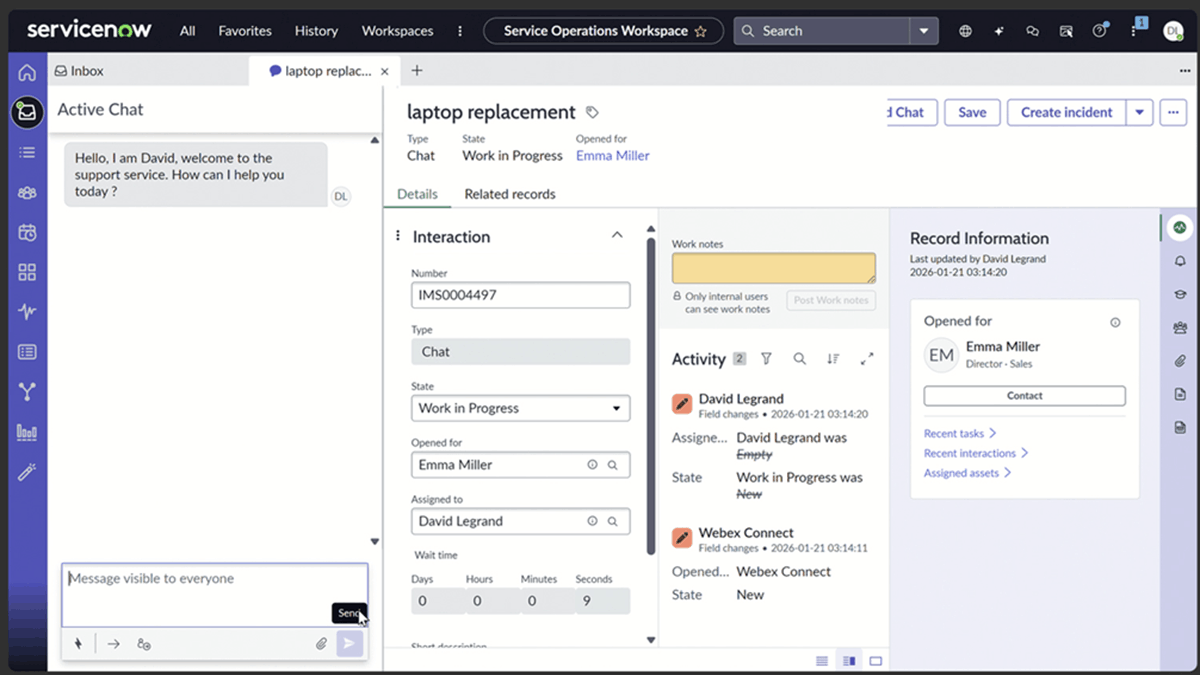
For service environments, Webex Contact Center integration with ServiceNow embeds contact center functionality directly into case workflows. On-premises customers also gain access to AI-assisted summaries, transcription, and real-time guidance, extending modern capabilities to hybrid and regulated deployments.
Evaluating the Practical Impact of Connected Intelligence
Assessing the Fit Across Enterprise Environments
Cisco’s Connected Intelligence framework is positioned as an incremental evolution rather than a disruptive overhaul. Organizations with existing Cisco collaboration, networking, or contact center investments are likely to see the most immediate value, particularly those managing hybrid work at scale or supporting distributed frontline teams.
Opportunities Unlocked Through Platform Alignment
By aligning devices, collaboration software, and management tools, Cisco opens opportunities for more predictable operations and improved visibility. Enterprises seeking to standardize collaboration across varied environments may benefit from reduced complexity and tighter governance.
Key Challenges and Considerations
A key consideration will be how effectively these capabilities are implemented across organizations. Connected Intelligence depends on strong adoption across IT, facilities, and business teams, not just on the technology itself.
At the same time, smooth integration with existing third-party platforms will matter, as will helping teams adjust to new ways of working. Clear guidance during deployment and ongoing compatibility across systems can help prevent disjointed experiences and ensure the technology supports day-to-day work as intended.
Closing Thoughts
Cisco’s approach suggests a steady shift toward distributed intelligence that supports hybrid work without forcing architectural change. If Cisco continues to balance innovation with operational stability, Connected Intelligence could resonate with enterprises prioritizing control, security, and gradual modernization.
The long-term impact will depend on how effectively Cisco translates this framework into measurable outcomes for customers navigating the next phase of workplace evolution.
Keep pace with collaboration trends that matter to your organization. Subscribe to our newsletter for practical, trusted insights.