 ·
3 minute read
·
3 minute read
The Brief: RingCentral introduced AIR Pro, a voice-first, omnichannel AI agent platform designed to automate customer interactions across business communications and contact center environments. The platform includes a no-code builder, AIR Pro Studio, enabling users to create and deploy AI agents using natural language. AIR Pro supports real-time reasoning, multilingual interactions, and autonomous execution of tasks such as authentication, scheduling, and case management.
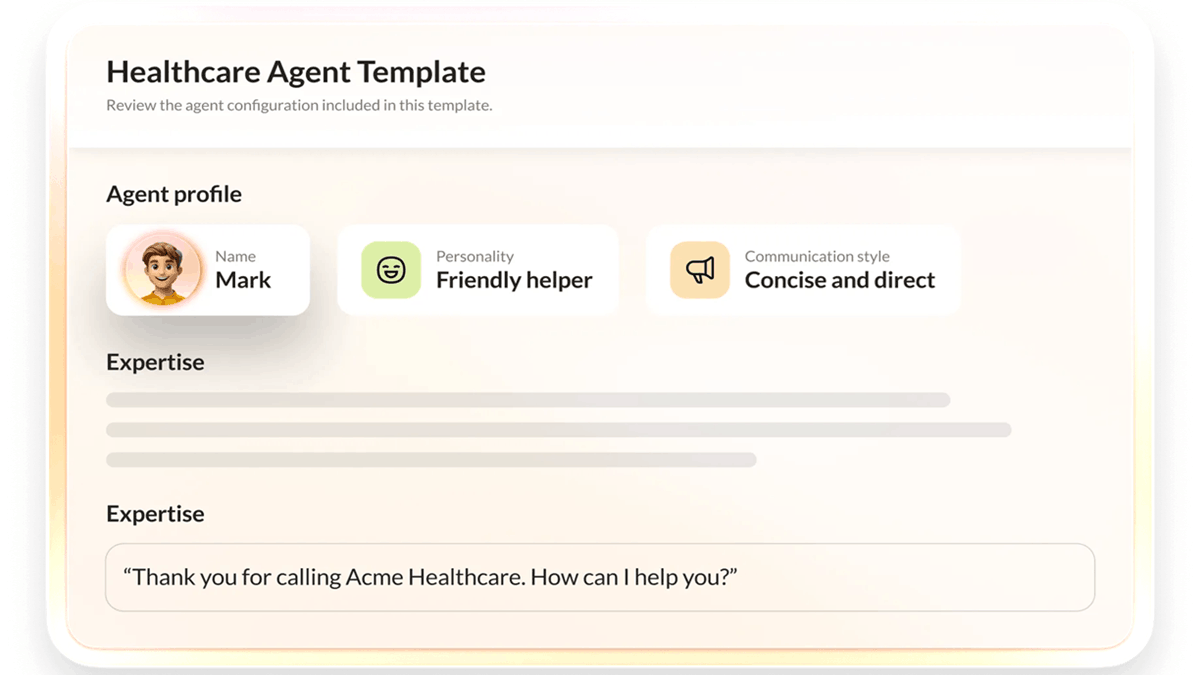
Alongside this, RingCentral launched AIR Pro for Healthcare, an industry-specific solution tailored to patient access and administrative workflows. It integrates with electronic health record systems and includes pre-built healthcare workflows for scheduling, verification, and intake.
Both offerings are currently in controlled availability, with broader rollout expected later this year.
Learn full details of the announcement about AIR Pro and AIR Pro for Healthcare at ringcentral.com.
 Source: RingCentral
RingCentral Unveils AIR Pro and AIR Pro for Healthcare
Analyst Perspective: RingCentral is positioning AIR Pro as part of a broader evolution toward agentic systems that operate alongside human teams. This reflects a transition from reactive tools to proactive systems capable of handling multi-step processes independently.
The inclusion of healthcare-specific capabilities demonstrates a focus on environments with high interaction volume and regulatory complexity. These conditions create a strong use case for automation that can manage routine processes while maintaining structured data handling.
There is also an underlying shift toward continuous optimization. With analytics and feedback loops embedded into the platform, organizations are expected to refine performance over time. This places importance on ongoing monitoring and iteration as part of the operational model.
Advancing AI Agents With Autonomous Execution and No Code Design
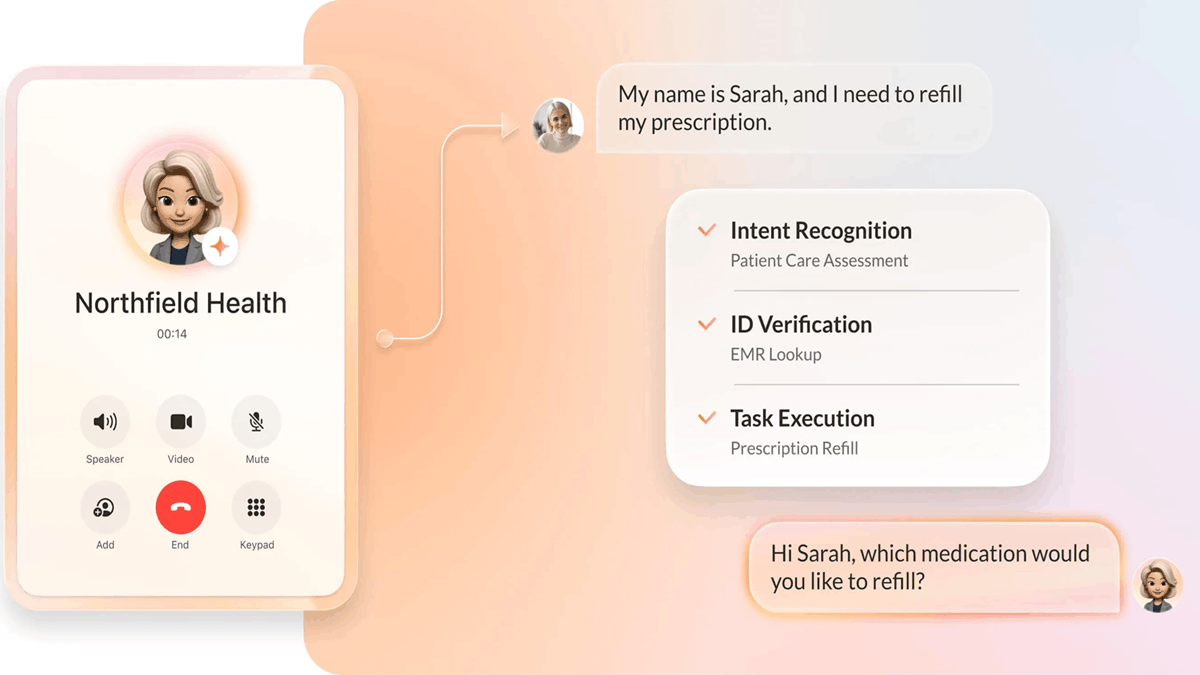
AIR Pro introduces a model where AI agents are designed to handle tasks end-to-end within a single interaction.
Instead of limiting AI to conversational support, the platform enables agents to interpret intent and complete actions such as updating systems, initiating workflows, and resolving requests without escalation. This reduces reliance on manual intervention and shortens resolution cycles.
The no-code environment, AIR Pro Studio, allows users to define goals and deploy agents quickly without development expertise. This design aims to accelerate adoption across business teams while supporting customization through templates and integrations.
By combining conversational capabilities with operational execution, the platform highlights a broader trend of embedding intelligence directly into communication workflows, enabling more efficient and responsive customer engagement models.
 Source: RingCentral
Expanding Into Healthcare With Pre Built Workflows and EHR Integration
AIR Pro for Healthcare focuses on automating patient access and administrative coordination.
The solution includes pre-configured workflows tailored to common healthcare interactions, such as appointment scheduling, insurance verification, and intake processes. These workflows are designed to operate within a single interaction, minimizing fragmentation across systems.
Integration with major electronic health record platforms enables AI agents to access and update patient data in real time. This allows organizations to move beyond information delivery and toward transactional capabilities within patient interactions.
The platform also supports continuity between automated and human-assisted interactions. When escalation is required, context is preserved, ensuring that care teams have full visibility into prior engagement, which can help maintain consistency and reduce redundancy.
 Source: RingCentral
Supporting Compliance and Operational Efficiency in Regulated Environments
Healthcare environments require strict adherence to regulatory standards, and AIR Pro for Healthcare incorporates features to address these needs. The platform includes role-based access controls, secure identity verification, and audit-ready interaction histories. These elements are designed to support compliance while enabling automation.
The ability to automate routine administrative tasks can help reduce operational strain on healthcare staff. By handling high-frequency interactions such as scheduling and billing inquiries, the platform allows personnel to focus on care delivery and more complex coordination tasks.
At the same time, governance capabilities play a central role in ensuring that automated processes remain transparent and accountable. This balance between efficiency and compliance is critical in environments where data sensitivity and accuracy are essential.
Assessing the Role of Agentic AI Platforms in Enterprise and Healthcare
AIR Pro and its healthcare-specific extension introduce a model where AI agents are embedded directly into operational workflows. This creates opportunities for organizations managing high interaction volumes to improve efficiency without expanding workforce capacity.
In customer service environments, the ability to resolve issues within a single interaction can reduce wait times and improve consistency. Meanwhile, in healthcare, automating administrative processes allows providers to redirect resources toward patient care.
These solutions are particularly relevant for enterprises with complex systems and frequent interactions across multiple channels. Organizations in sectors such as healthcare, financial services, and retail may benefit from the combination of automation, integration, and real-time execution.
Addressing Potential Challenges
Integration complexity remains a key consideration, especially for organizations with legacy systems. Ensuring data accuracy and maintaining consistent performance across automated workflows also require ongoing oversight.
There is also the need for governance frameworks that can manage how AI agents operate within defined boundaries. Without clear controls, organizations may face risks related to compliance, customer experience, or operational errors.
Addressing these challenges will require a combination of technical capability and organizational readiness.
Future Outlook on Agentic AI Adoption
Looking ahead, the introduction of AIR Pro highlights an industry trend toward systems that combine communication and execution within a unified platform. As organizations continue to evaluate AI investments, solutions that demonstrate measurable operational impact are likely to gain traction.
The emphasis on vertical-specific capabilities suggests that future developments will focus on deeper industry alignment rather than general-purpose tools. Continued investment in integrations, analytics, and governance will be critical in shaping how these platforms evolve.
Over time, the success of these solutions will depend on their ability to operate reliably at scale while adapting to changing business requirements.
Need authoritative perspectives for media coverage or engaging presentations at your event? Contact us to connect with experts who make complex topics accessible and relevant.