 ·
11 minute read
·
11 minute read
"We shouldn't be a reflection of the market. We should be the place where the future of AV is being decided."
That's Michael Blackman, Managing Director of Integrated Systems Europe (ISE) , sitting across from me on the last day of ISE 2026. After four days of running the world's largest professional AV and systems integration event - 92,170 visitors, over 1,750 exhibitors across 8 halls - the man still had energy to spare. And when you hear that line, you understand why ISE keeps breaking its own records. Day one was 10% ahead of last year. Day two put more people in the building than the entire 2019 Amsterdam show. By day three, they'd already surpassed 2025's total attendance.
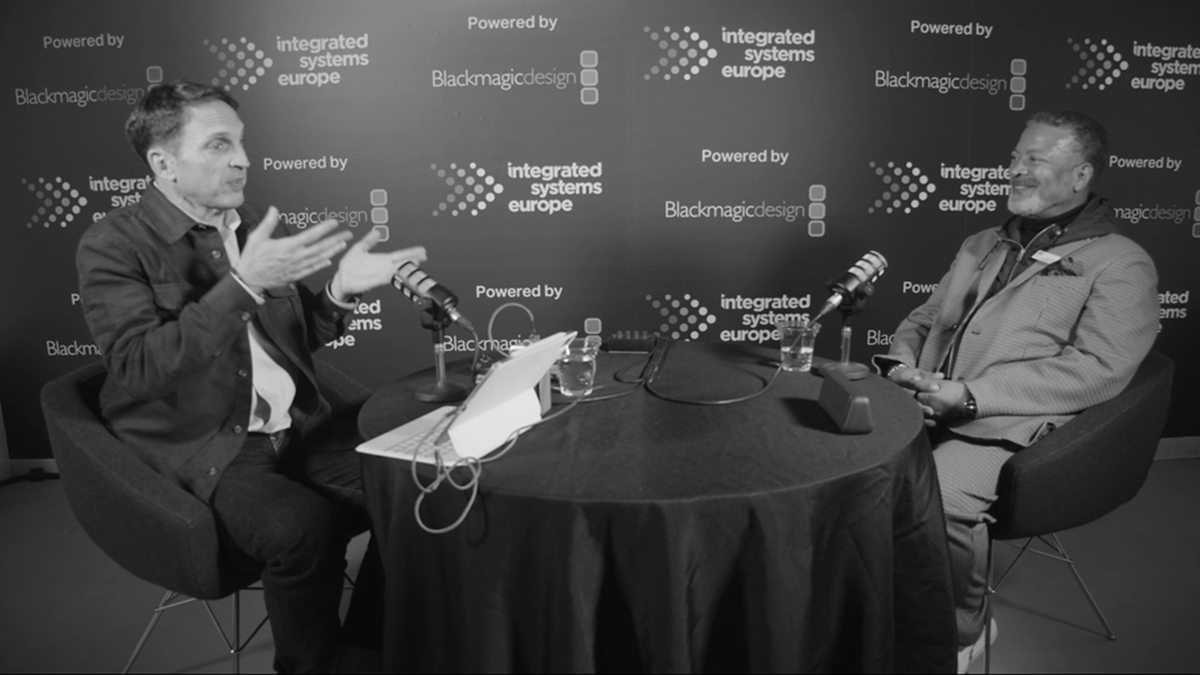
SPECIAL EDITION WEBCAST: Catching up with Mike Blackman, Managing Director of ISE
I had the privilege of an exclusive one-on-one conversation with Mike for our Direct from the Expo series, and what struck me wasn't just the numbers. It was the clarity of his vision. "People are coming here to discuss and shape the industry," Mike told me. "It's really changed from just being a reflection to being something that's driving the future."
That perspective framed my entire week. This article doesn't try to boil the ocean of ISE: ( The 8+ halls of digital signage, lighting, live events, broadcast, and residential.) Instead, this is a focused read on the conferencing and collaboration experience: the meeting room hardware, software, and platform ecosystem where IT leaders, facilities teams, and Pro AV professionals are making buying decisions that will shape how their organizations communicate for the next three to five years. I walked the halls, sat in the briefings, and conducted on-camera interviews with executives from Jabra, Shure, Cisco, Crestron, and NetSpeek.
What I came away with wasn't a collection of product announcements. It was a pattern. Three signals kept surfacing independently, across different companies, all pointing in the same direction. Here's the field guide.
Signal 1: The Room Became an IT Endpoint
The most consequential shift at ISE 2026 had nothing to do with a single product launch. It was a change in operational philosophy: the meeting room is no longer an AV project. It's an IT endpoint.
As one point of reference, Microsoft's Device Ecosystem Platform (MDEP) has become the gravitational center for an expanding constellation of hardware partners. Yoav Barzilay framed this well in his blog post on Microsoft Tech Community. These were announced and launched products that were visible woven into most every conversation I had on the floor:
When I sat down with Jabra's Olly Henderson, he walked through how their entire PanaCast portfolio, two to twenty-two people, huddle rooms to large boardrooms, is now built around MDEP certification and their Jabra Plus management platform. Olly framed the problem in terms any IT leader would recognize: "If you've got hundreds and thousands of rooms and you have to deploy boots on the ground, it's eye-watering sums of money." Jabra's answer is a scalable portfolio manageable through a single pane of glass. "I think it's important to put guardrails around what you do," Olly said. That kind of discipline, in a market where every vendor wants to be everything, is a signal worth noting.
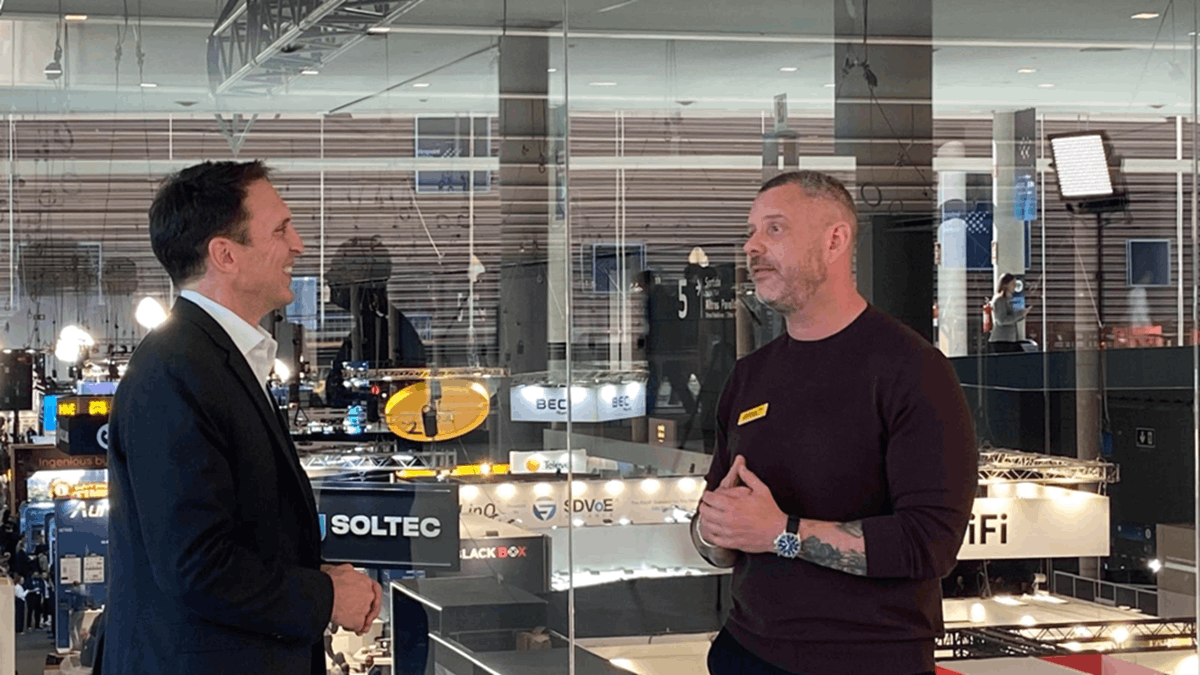
Olly Henderson, VP Hybrid Products and Technology, Jabra
Shure is telling a similar story. In my interview with Susy Liem, Shure's VP of Product Management, we discussed how ShureCloud has evolved from a preview at ISE 2025 into a full fleet management platform. Real-time monitoring, remote firmware updates, proactive maintenance alerts, and integrations with ServiceNow. "We have onboarded hundreds of customers, many of them Fortune 500," Susy told me. But what caught my ear was the direction: "We are opening up our cloud API to talk to other network management when issues happen. It's not necessarily that the devices are the problem. Sometimes it's the network." Shure isn't just selling microphones anymore; they're selling observable, managed audio infrastructure. And in their Innovation Lab, they were demonstrating early MCP-based AI agent-to-agent communication for self-healing room environments.
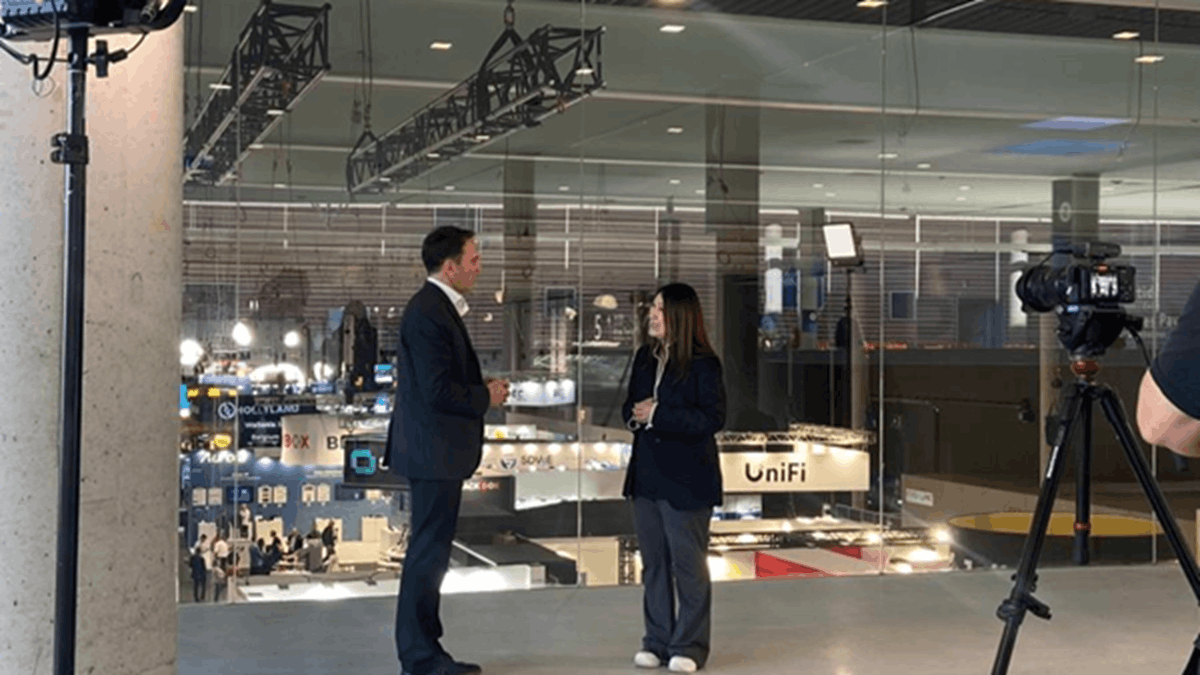
Speaking with Susy Liem, Vice President, Product Management Collaboration and Conferencing, Shure
Cisco took this further. In my conversation with the Cisco team at ISE, the message was "essential workplace infrastructure for the AI era." Anna Bieber walked me through the Room Kit Pro G2 — NVIDIA-powered AVoIP with what they call "one-click to Distance Zero" deployment, plus multi-camera support and Microsoft Teams certification. Olivier Proffit demonstrated the Desk Pro G2 with "ultimate express install," out of the box and meeting-ready in under five minutes, zero tools. Their AI Agent integration introduces AI for IT administration, letting admins manage environments through the AI tool of their choice, such as Microsoft Copilot, in natural language or modalities supported by those tools. And in a notable ecosystem move, Cisco announced NVIDIA-powered MDEP support and made GA Zoom interoperability for Cisco Rooms announced previously at WebexOne, putting manageability ahead of platform lock-in. To hear it first hand, you need to check out my Direct from the Expo interview with Rich Bayes as he walks me through all of the announcements.
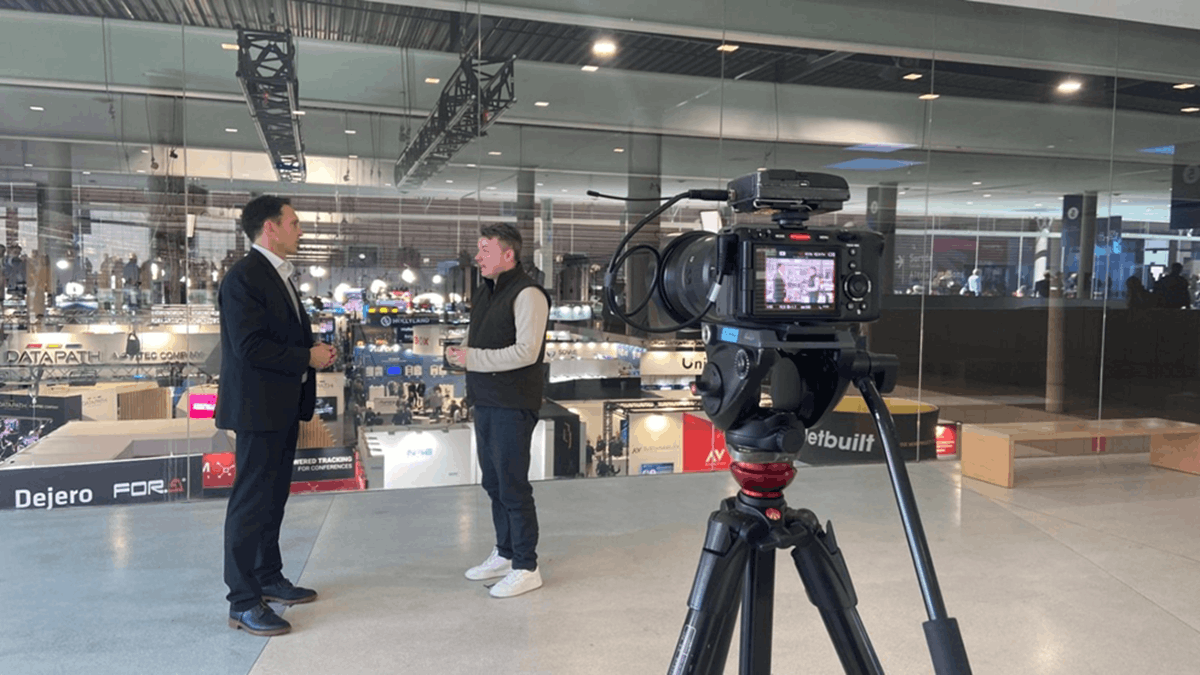
Rich Bayes, Senior Director of Product at Cisco Collaboration Devices, Cisco
Meanwhile, Crestron Electronics invited us behind the scenes at their True Blue Summit, a private event held at Camp Nou stadium during ISE week. With Brad Hintze, Alex Peras, and Joel Mulpeter and the Crestron team, we explored how their Collab Compute, 80 Series Touch Screens, Automate VX 6.5, the One Beyond i12D camera, and DM NAX Intelligent Audio are positioning Crestron at the intersection of AV control and IT infrastructure management. Joel Mulpeter walked through each of these five innovations in detail.
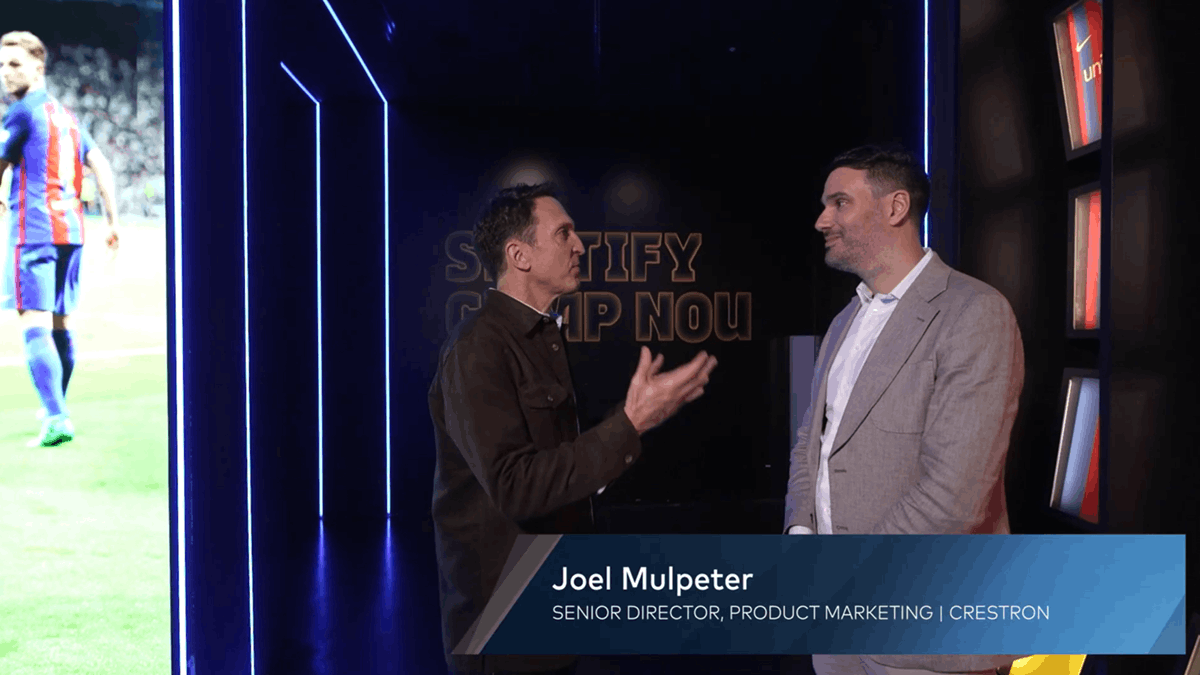
Getting insights from Joel Mulpeter, Senior Director, Product Marketing, Crestron
The common thread: rooms are being absorbed into IT's operational model. And companies like NetSpeek are already demonstrating what proactive room health monitoring looks like, pulling device logs, normalizing them, and flagging anomalies before users submit a ticket.
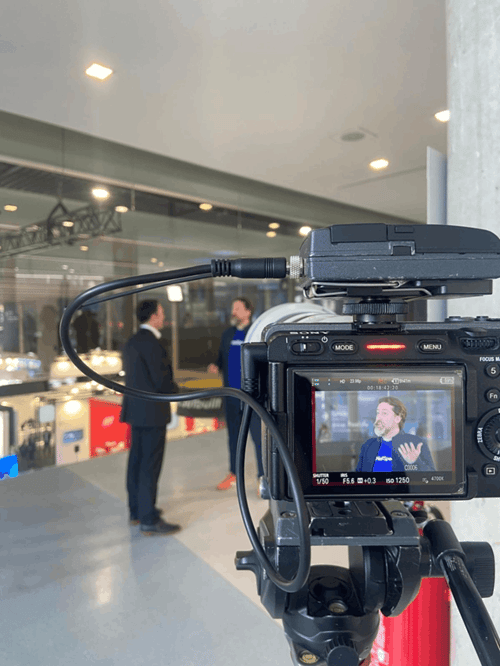
Craig Durr speaking with Erik DeGiorgi, CEO of NetSpeek, at ISE 2026
The important nuance: the deployment challenge (Day 1) has been largely solved. The operational challenge (Day 2), keeping hundreds or thousands of rooms healthy, firmware current, and users productive, is the new battleground. Every major vendor at ISE 2026 acknowledged this, even if they're at different stages of solving it.
“The operational challenge (Day 2), keeping hundreds or thousands of rooms healthy, firmware current, and users productive, is the new battleground.”
For a deeper dive, see our pre-event coverage and the full ISE 2026 blog series. I also co-authored an ebook with Logitech on their new Rally AI Camera and Rally AI Camera Pro, a useful companion read for those evaluating large-room deployments.
Signal 2: Cameras Got Smarter Than the Rooms They're In
Camera intelligence has officially moved past simple framing. At ISE 2026, companies like Jabra, Shure, Huddly, and Neat were showing AI-powered director modes - speaker tracking, dynamic group framing, multi-camera switching, intelligent composition - all in real time, all without a human operator.
Jabra + Huddly partnership: Huddly's Crew multi-camera AI director is now integrated into Jabra's large-room PanaCast Room Kit. A single L1 camera for rooms up to sixteen, or three to five Crew cameras for the largest spaces, all over category cable, all interdependent. "Why reinvent the wheel?" Olly said. "This is truly plug and play. Every installer has those cables on their truck, and you're up and running." (We covered the strategic rationale in an earlier analysis: Jabra and Huddly Position for the Next Phase of Meeting Room Standardization.)

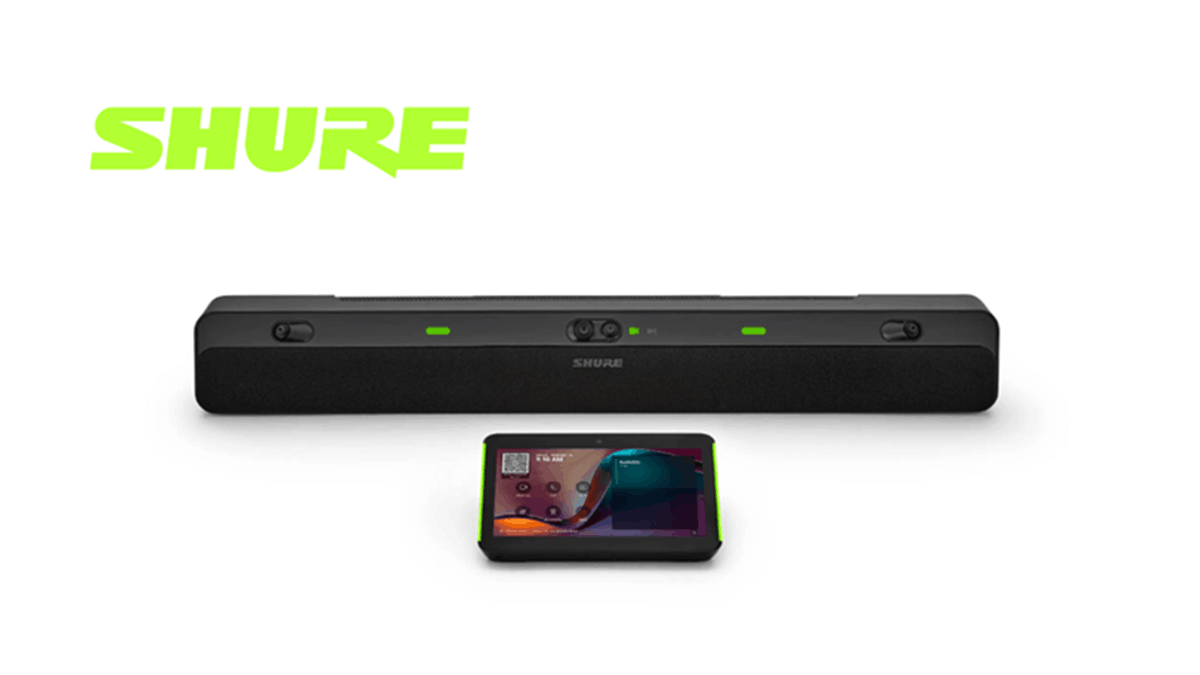
Shure IntelliMix Bar Pro: Shure's first front-of-room video bar features a patented four-camera array with 135-degree combined field of view. "All of these are all our own IP, and we have a dedicated team that works on this particular product," Susy Liem told me. "It is patent pending, and we are very proud of it." This isn't an ODM play. Shure has invested in video for years. The bigger story: Shure's decades of audio processing intelligence now informs video behavior. As Susy framed it: "Meetings used to be, 'Can you see me? Can you hear me?' But now it is all about AI. We need to make sure that we feed the AI with good quality audio and video." Shure is positioning itself as the foundational input layer.
The gap worth watching: these cameras are generating rich data, occupancy counts, usage patterns, spatial awareness, and acoustic environment analysis, but many room management systems are far from deriving truly exceptional insights from it. Granted, some management platforms can do interesting tasks, like drop "holds" on empty rooms, or auto-book a room when someone is present, but that is only the tip of the iceberg, in my opinion.
The data these cameras generate will eventually feed the orchestration layer. That connection between Signal 2 and Signal 3 is where the real value gets unlocked.
Signal 3: Orchestration Became the Contested Territory
If Signal 1 is the "what" (rooms as endpoints) and Signal 2 is the "awareness layer" (smart cameras generating data), Signal 3 is the "who controls it": the software layer that manages, monitors, and heals multi-vendor room fleets.
The company that crystallized this most clearly was NetSpeek. I've been tracking their journey since they came out of stealth in ISE 2025's Innovation Park. One year later, they were on the main floor with a full, shippable product. As Mike Blackman told me about the Innovation Park model: "We brought these guys in, put them bang smack in the middle of the show, so everybody goes through there." NetSpeek's journey from Innovation Park to the main floor is exactly that success story. (For the backstory: our InfoComm 2025 interview with CEO Erik DeGiorgi and pre-ISE coverage of Lena.)
In my Direct from the Expo interview, Erik used an analogy that crystallized the concept:
"Think about orchestration in a symphony orchestra. You have horn players, string players, and percussionists. But what brings them together? The conductor. We see our platform as the conductor that understands when each device — when each instrument — should be played."
The difference between integration and orchestration isn't academic. Integration means APIs and data flows. Orchestration means an AI that understands how a Shure microphone array behaves differently from a Neat soundbar, can diagnose why a room's audio quality degraded after a firmware update, and can resolve the issue autonomously — sometimes before anyone in the room notices a problem. The platforms emerging in this space are processing thousands of words of contextual reasoning behind a single user command, building memory from deployment-specific patterns (like which rooms get unplugged by cleaning crews on Thursday nights), and moving toward proactive autonomous troubleshooting where the system identifies and resolves issues without a human ever filing a ticket.
"It's science fiction, Craig," Erik told me. "We're building something that ten years ago would only be in science fiction, and now it's real in front of us."
The orchestration layer is where vendor lock-in or vendor freedom gets decided. Crestron has XiO Cloud. QSC has Q-SYS Reflect. Cisco has Control Hub. All are strong, but all are rooted primarily in managing their own hardware ecosystems. The open question is who will own the multi-vendor orchestration layer that sits above all of them. NetSpeek's bet: an independent AI platform with no hardware loyalties. That's a thesis worth watching closely.
The Noise: What Sounded Important But Isn't (Yet)
An analyst's job isn't just to amplify signals. It's to filter noise. Four patterns at ISE 2026 deserved skepticism:
First, AI washing. A meaningful number of exhibitors were relabeling existing DSP features, basic automation, or rule-based logic as "AI-powered." When every product on the floor claims AI, the term loses meaning. Mike Blackman acknowledged this dynamic head-on in our conversation, noting that AI is "a red line that runs through everything" at this year's show, but he was notably enthusiastic about how ISE addressed it: "The great thing is we had a keynote Sol Rashidi, MBA talking about really taking away the bullshit from AI, and saying, 'This is what you really need to know, how you implement it.'" That thought leadership is part of what makes ISE valuable. The test for buyers remains simple: if a company can't explain what changed architecturally... what model they're running, where inference happens, what data trains it, and how the system improves over time - treat it as marketing, not technology.
Second, hardware-only announcements that arrived without a cloud management story. In a world where Day 2 operations are the battleground, a beautiful piece of room hardware without a fleet management and monitoring narrative is only half a product. The question every IT buyer should be asking at trade shows is no longer "What does this device do?" but "How do I manage a thousand of them?"
Third, partnership announcements without shipping products behind them. ISE is a popular place to sign MOUs and issue press releases about "strategic partnerships." The ones that matter are the ones where you can walk to a booth and see an integrated, working product. Announced partnerships are intentions. Shippable integrations are evidence.
Fourth, immersive and holographic experiences. HP Dimension with Google Beam is genuinely fascinating. Samsung's glasses-free 3D turned heads. Mike Blackman was visibly excited about both, and so was I. He described the trajectory: "It's no longer 2D speaking across the wires. We're getting a little bit more realistic. We might get to the stage of Star Trek, where we have those 3D beaming up eventually."
But these are showcase-stage technologies, not deployment-ready for most organizations. File under "watch", not "budget." When the cost curve bends and the use cases sharpen, this category will matter enormously.
The noise filter is part of the analyst value-add. Not everything that's loud is important.
Future Watch: Four Companies Worth Tracking
Beyond the three main signals, four companies deserve attention heading into the second half of 2026 — with full transparency about my relationship (or lack thereof) with each.
Kollective (kollective.com): Established eCDN company (275 Fortune 2000 customers) expanding into Microsoft Teams collaboration observability. AI-driven anomaly detection targeting the 50,000+ collaboration support tickets enterprises generate annually. Not at ISE as an exhibitor, but leadership was at the show shopping an MSP channel strategy ahead of their April 2026 launch. Full disclosure: I met with Garrett Gladden and Neal Lauther and believe their approach warrants attention.
Google Meet / Google Workspace: Google is the sleeping giant of enterprise collaboration. They have the platform, the infrastructure, and the AI talent — and for years, the knock was that they weren't serious about closing the enterprise gaps that kept IT buyers from considering them alongside Microsoft and Cisco. That's changing, quietly and methodically. Teams interoperability (February 2026) means Chrome OS-based Meet Rooms can now join Microsoft Teams meetings and vice versa, closing the last major interop barrier that gave procurement teams pause. The Neat hardware partnership (April 2025) brings an additional OEM option to Google's existing hardware options. The story is good. Multi-platform devices that organizations can reconfigure to Meet without hardware replacement, fundamentally changing migration economics. And persistent chat convergence (November 2025) now flows in-meeting messages into Google Chat post-meeting, closing the multimodal continuity gap that frustrated users.
Three moves, almost no noise about any of them, and each one systematically eliminates an enterprise objection. The customer traction they're gaining warrants the attention.
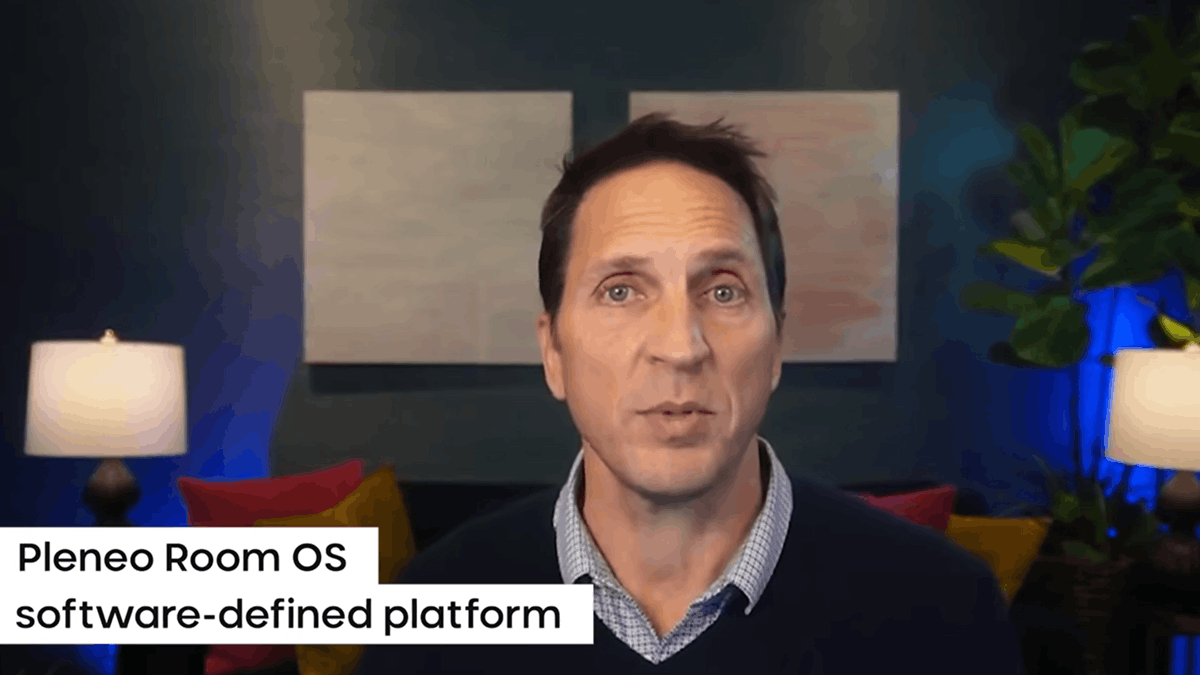
Pleneo (pleneo.com): Software-defined platform targeting medium-to-large spaces (12–25 seats) with AI-powered zero-touch provisioning, IT-centric cloud management with ServiceNow, and enterprise security (SOC 2 Type II, ISO 27001, ISO 42001). Their positioning captures Signal 1 in a single sentence: "Professional AV results, delivered through IT-centric workflows." I produced a Modern Work Pulse Solution Spotlight with Pleneo — watch it for the full product story.
Spacera (spacera.io) — SPACERA is an Australian company offering vendor-agnostic "Meeting Room as a Service" via their Apollo platform. 94%+ of room incidents resolved before end users notice. Automated start-of-day testing, "Golden Room State" one-click reset, flat monthly per-room rate. First Australian company in the Zoom ISV Exchange Program, also on the Cisco Webex App Hub. No relationship with this company, pure signal-spotting. They address the Day 2 gap at the top of all three signals.
The Direction Is Clear
The meeting room's trajectory at ISE 2026 was unmistakable. It is becoming a managed IT endpoint (Signal 1) with intelligent sensors generating actionable data (Signal 2) and a contested orchestration layer on top, determining who controls the room experience (Signal 3). The companies that win this cycle won't be the ones with the best standalone hardware. They'll be the ones who understand that this isn't an AV conversation anymore. It's an IT operations conversation.
It is becoming a managed IT endpoint (Signal 1) with intelligent sensors generating actionable data (Signal 2) and a contested orchestration layer on top, determining who controls the room experience (Signal 3). - Craig Durr, Chief Analyst, Collab Collective
And if there's one thing Mike Blackman's ISE has proven, it's that Barcelona is where that conversation gets decided. As he told me: "When I walk in and see what companies are doing and how they're being creative, it really gets me here saying, 'Wow.' It really makes people enjoy it." That combination of community, innovation, and creative ambition is why 92,000 people showed up. It's why ISE keeps growing. And it's why, if you make decisions about collaboration technology for your organization, Barcelona needs to be on your calendar.
I came to Barcelona looking for the signals. Turns out, ISE 2026 was the signal.
Continue the Conversation
This article is part of The Collab Collective's comprehensive ISE 2026 coverage program. Below are a few select items from our coverage:
📹 Direct from the Expo — ISE 2026: On-camera interviews with Jabra, Shure, Cisco, Crestron, NetSpeek, and ISE Managing Director Mike Blackman.
📺 Modern Work Pulse: Solution Spotlights including our Pleneo episode.
🎙️Decision Point: Our Q-SYS episode featuring a post-Activate update and ISE preview covering their new RoomSuite modular system.
📝 Blog Coverage: NetSpeek Lena analysis · ISE + Logitech Connected Classroom · Jabra + Huddly · All posts
📘 Logitech Rally AI Camera Ebook: Co-authored with Logitech on the Rally AI Camera and Rally AI Camera Pro for intelligent large-room deployments.