 ·
4 minute read
The Brief: Cisco is bringing real-time, two-way AI speech translation to Webex Calling through Translator Agent, a feature that lets people converse in different languages without a separate interpreter or translation service.
Cisco is currently offering the feature through Controlled Availability in the Webex App and expects to open access more broadly in November 2026. The company will then expand support to select enterprise phones in Q1 2027, including models in the Desk Phone 9800 Series and the Wireless Phone 9821.
Translator Agent supports 10 languages and uses technology from Cisco’s acquisition of EzDubs. The Enhanced AI Offer will include the feature, with 50 translation minutes per licensed user each month and additional minutes available as an add-on.
Find full details of the announcement about Translator Agent in Webex Calling at blog.webex.com.
 Source: Webex
Cisco Introduces Real-Time AI Translation for Webex Calling
Analyst Perspective: Cisco’s Translator Agent brings AI into a part of business communication where timing, tone, and meaning all matter. People who speak different languages can converse through their existing calling environment, without having to arrange an interpreter or switch to a separate translation service. This makes language support part of the conversation itself, allowing participants to respond more naturally as discussions unfold.
The technology also adds a distinct capability to Cisco’s existing AI communications portfolio. Noise removal, transcription, captions, and summaries help people hear, document, and review conversations. Translator Agent addresses a different need by helping participants understand one another in real time. Its ability to preserve characteristics of the speaker’s voice, including tone and emotion, also recognizes that communication involves more than the literal meaning of words.
The feature also gives Cisco an opportunity to make AI more relevant to everyday business communication. Beyond its technical capabilities, its success will depend on how naturally and accurately it handles live speech and whether employees can rely on it during demanding customer interactions.
Translator Agent Brings Two-Way Speech Translation to Webex Calling
Translator Agent allows two people who speak different languages to converse through real-time, bidirectional speech translation. Each person speaks in their preferred language, and the system translates the exchange as the conversation progresses. Consequently, participants can communicate without arranging an interpreter or using a separate translation service.
Cisco built the capability on technology from its acquisition of EzDubs, a pioneer in real-time speech translation. The system also aims to preserve vocal characteristics, including tone and emotion, so translated speech retains more of the original speaker’s intent.
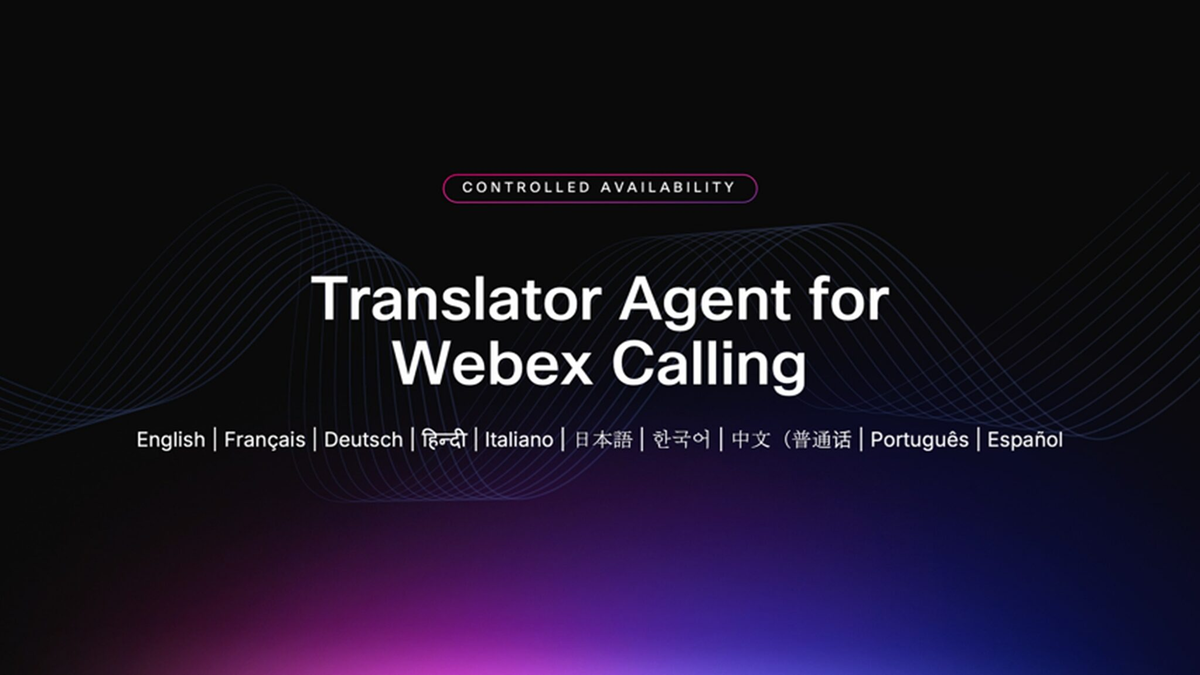
With support for 10 languages, Translator Agent covers English, French, German, Hindi, Italian, Japanese, Korean, Mandarin, Portuguese, and Spanish. It is currently in Controlled Availability through the Webex App and is expected to become generally available in November 2026.
 Source: Webex
Cisco Adds Real-Time Translation to Its Enterprise Phone Portfolio
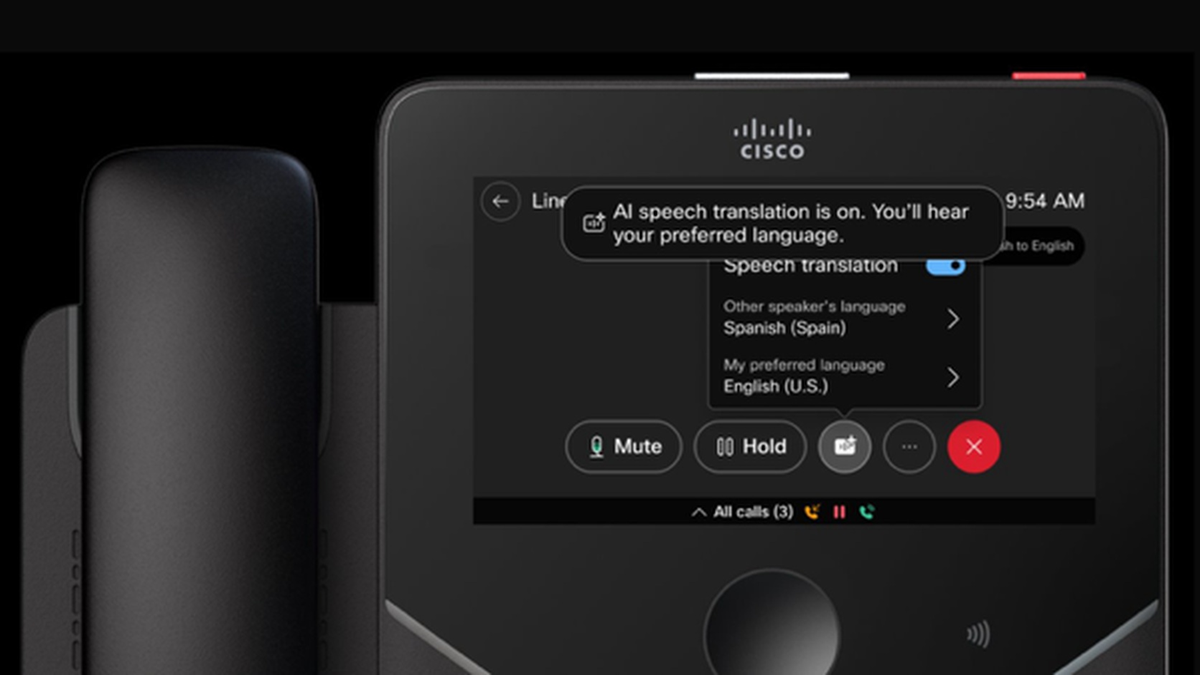
Cisco plans to bring Translator Agent to supported enterprise phones in the first quarter of 2027. Compatible devices will include the Cisco Desk Phone 9861, 9871, and 8875, as well as the Cisco Wireless Phone 9821.
During a call, users select the other participant’s language and their own preferred language, allowing the system to translate the conversation in real time. This development builds on Cisco’s existing work to incorporate intelligent capabilities into its phone portfolio, which has sold more than 100 million IP phones worldwide.
The Desk Phone 9800 Series already supports AI-powered noise removal, real-time closed captioning, transcription, and AI-generated summaries. Translator Agent adds multilingual communication to these capabilities, which brings customer-facing teams another way to communicate with people who speak different languages through their existing Cisco phones.
Enhanced AI Offer Gives Organizations Flexible Translation Licensing
Not every employee will have the same need for translation, and Cisco's proposed licensing model accounts for this difference. When Translator Agent becomes generally available in November 2026, Cisco plans to include it in its Enhanced AI Offer, with 50 minutes of translation per licensed user each month. Businesses that need more time can purchase additional minutes separately.
For organizations, this creates an opportunity to match spending with usage rather than assume every employee needs the same level of access. Teams that communicate with multilingual customers throughout the day may require more minutes than departments that use translation less frequently.
However, the supplied details do not specify pricing for the offer or additional translation minutes. So businesses will need to consult Cisco or their partners for commercial terms before calculating deployment costs. Actual demand will also help organizations determine how many licenses they need and whether the included allowance meets their requirements.
Cisco Brings Language Support Into Its AI Communications Strategy
Translator Agent fits Cisco’s continued development of AI-enabled communication tools. Its existing portfolio already helps users hear conversations more clearly, document discussions, and review call summaries.
Real-time translation addresses another need by helping people communicate across language differences, particularly in organizations that serve international customers or operate across multilingual environments.
The Importance of Accuracy in Live Conversations
Successful implementation will depend on more than the feature’s ability to translate speech. It must also respond quickly and convey the speaker’s intended meaning, even when people have different ways of speaking. Businesses should put these capabilities to the test with representative conversations, paying close attention to technical terminology and discussions that require a high degree of precision before expanding access across their teams.
Organizations must also consider the monthly allowance, since frequent users may need additional minutes. Usage reviews can help them determine whether the licensing model suits their needs.
What Cisco Needs to Prove Next
Cisco’s plans for the Webex App and selected enterprise phones give organizations more than one way to introduce translation into existing workflows. But adoption will depend on the quality of the experience, language support, licensing costs, and the feature’s performance in real business conversations.
If Translator Agent can deliver accurate translations without disrupting the natural flow of speech, it could become a useful addition to Cisco’s collaboration portfolio. The initial rollout should provide a clearer picture of how employees use real-time translation and which customer-facing environments benefit most.
Strengthen your brand voice through expert-led video and digital content. Get in touch with our team at the Collab Collective to learn how we help technology providers reach the right audience.