 ·
3 minute read
·
3 minute read
The Brief: Zoom has introduced two major additions to its platform: ZoomMate, an AI-powered work surface designed to connect conversations with execution, and the AI Productivity Suite, a collection of AI-assisted productivity tools that includes Zoom Canvas, Zoom Slides, Zoom Sheets, and Zoom Paper.
These offerings support Zoom’s broader vision of creating a system of action that helps organizations move work forward using meeting, chat, and collaboration context.
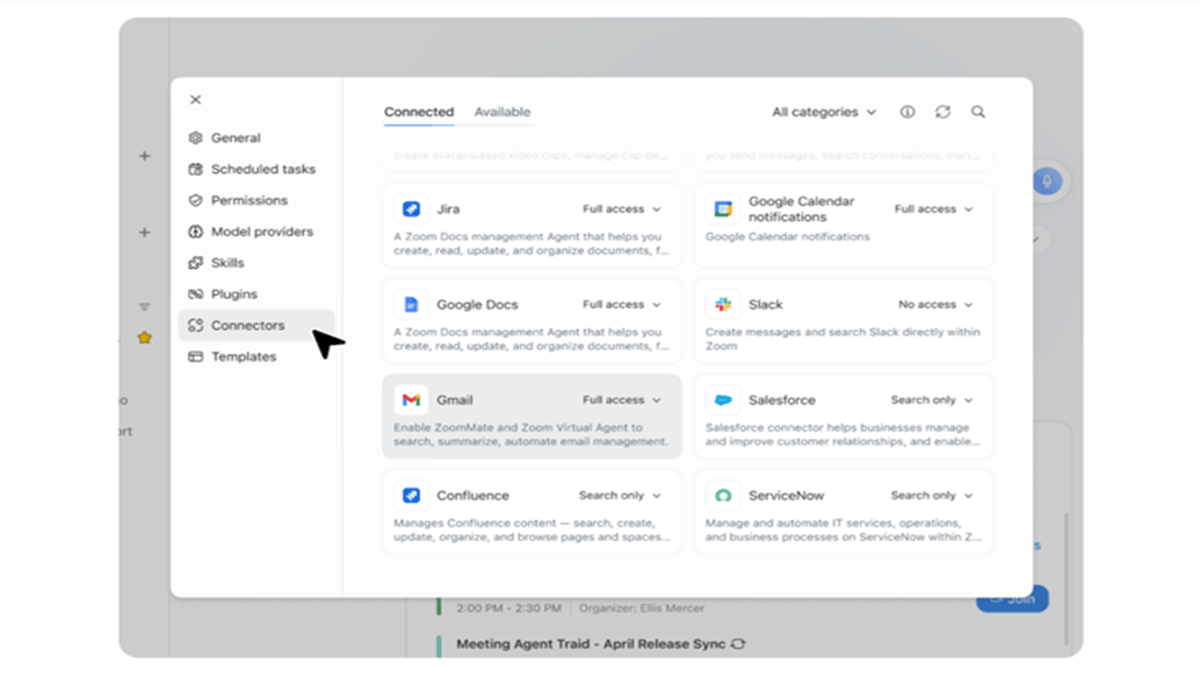
ZoomMate combines agentic search, workflow orchestration, and AI-generated content creation. It can connect with enterprise platforms such as Salesforce, Jira, Slack, ServiceNow, Google Workspace, Microsoft applications, and Workday.
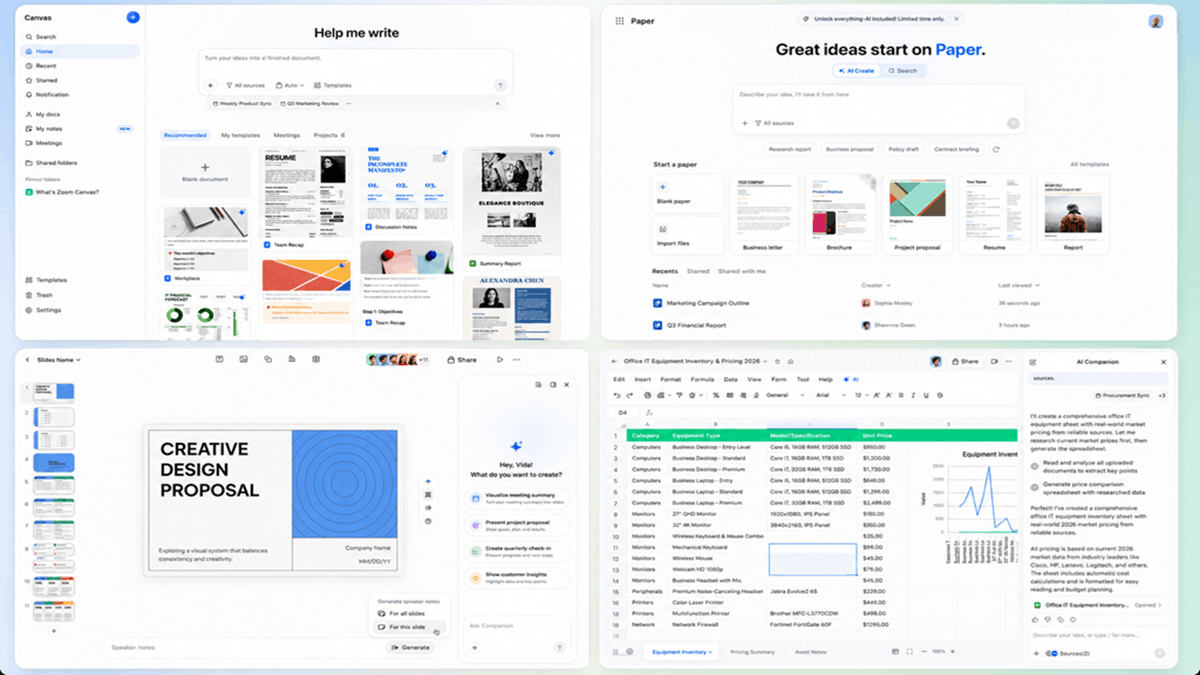
Meanwhile, the AI Productivity Suite enables users to generate documents, spreadsheets, presentations, reports, and project plans directly from meeting discussions and organizational context.
See full details of the announcement about ZoomMate and the AI Productivity Suite at news.zoom.com.
 Source: Zoom
Zoom Unveils ZoomMate and AI Productivity Suite for Modern Work
Analyst Perspective: Zoom’s latest announcements highlight an effort to expand its role beyond communications and collaboration.
For years, the company has been associated primarily with video conferencing, but ZoomMate and the AI Productivity Suite position it closer to workflow and productivity platforms that manage business processes after meetings end.
The launch places considerable attention on conversational context as a source of business intelligence. Meeting discussions, decisions, and action items are used to generate documents, presentations, spreadsheets, and workflow activities, helping teams carry information directly into their day-to-day responsibilities. This creates a stronger link between collaboration and follow-through.
The strategy also aligns with a broader trend in enterprise software. Organizations increasingly seek tools that reduce manual coordination and connect fragmented information across applications. Zoom’s approach suggests that future workplace platforms may compete not only on collaboration features but also on their ability to operationalize knowledge captured during everyday interactions.
 Source: Zoom
Turning Conversations Into Business Outputs
A major objective behind the AI Productivity Suite is reducing the manual effort that typically follows meetings. Zoom built the offering around the idea that discussions already contain much of the information needed to create business documents and project materials. Instead of beginning with an empty file, users can generate content using meeting discussions, decisions, and shared information.
The suite consists of Zoom Canvas, Zoom Slides, Zoom Sheets, and Zoom Paper, which support the creation of presentations, spreadsheets, reports, project trackers, and collaborative documents. Compatibility with DOCX, PPTX, and XLSX formats also allows teams to continue working with commonly used business files.
By connecting outputs directly to meeting discussions, the suite helps preserve context throughout the content creation process. Teams can review the conversations behind deliverables while keeping documents current as new decisions are made.
 Source: Zoom
Bringing Enterprise Search and Workflow Management Into One Experience
ZoomMate adds functionality that goes beyond content creation by combining enterprise search with workflow management. Its agentic search capabilities enable users to retrieve information across connected business systems, including customer records, project documentation, service tickets, knowledge repositories, and collaboration tools.
Information can be gathered from Zoom interactions as well as connected third-party applications. This gives users access to relevant business data without requiring constant movement between separate platforms. The platform also enforces enterprise permissions and governance controls to manage access to organizational information.
In addition to search, ZoomMate can initiate and manage business activities. The platform can schedule meetings, create tasks, update records, route requests, and assist with onboarding and service-related processes. Through these capabilities, conversations can serve as the starting point for actions that continue across multiple business systems.
Supporting Teams Across the Organization
Zoom outlined several use cases that span multiple departments and business functions.
- Knowledge workers can use ZoomMate to collect information before meetings, coordinate schedules, and locate project-related content stored across different repositories. These capabilities can help reduce administrative work and improve meeting preparation.
- For sales teams, the platform can retrieve customer information, update opportunity records, and generate follow-up materials using meeting content and business data.
- Product and engineering groups can use the system to gather project information, monitor development activities, and create plans based on current project discussions.
- Human resources and operations teams can also benefit through policy assistance, request management, and onboarding support connected to enterprise applications.
This variety of use cases demonstrates Zoom's intention to serve organizations that require collaboration, information access, and workflow management across multiple departments.
Expanding the Scope of Workplace Collaboration
ZoomMate and the AI Productivity Suite build upon Zoom's existing communications portfolio by connecting meetings with the work that follows.
The company has long been associated with video conferencing, messaging, and collaboration, and these new offerings add document creation, enterprise search, workflow automation, and task execution to that foundation. They address common business challenges such as disconnected information, repetitive administrative tasks, and the need to manually transfer knowledge between applications.
Areas That Will Require Careful Execution
Organizations typically operate across numerous business systems, data repositories, and security frameworks. So delivering consistent results across those environments will require dependable integrations, strong governance capabilities, and accurate contextual understanding.
Adoption may also depend on how easily teams can incorporate the technology into existing workflows without introducing additional complexity.
Long-Term Opportunities for Zoom’s Latest Offerings
Demand continues to grow for AI tools that connect communication, information discovery, content generation, and workflow execution. Zoom's latest releases place the company in a category that extends well beyond meetings and messaging.
If the company can maintain reliable integrations and deliver accurate results across connected systems, these offerings may become particularly valuable for consulting firms, service organizations, sales teams, and other groups that routinely convert conversations into reports, proposals, project plans, and customer-facing deliverables.
Stay current on industry shifts that impact collaboration and communication. Subscribe to the Collab Collective newsletter and lead with clarity.