 ·
3 minute read
·
3 minute read
The Brief: Cisco introduced a broad set of infrastructure, operations, and security updates at Cisco Live Amsterdam, aimed at supporting agentic AI deployments at scale.
The announcements span new switching silicon, data center systems, optics, unified management, operational automation, and expanded security protections.
Central to the launch is the Silicon One G300 platform, new Cisco N9000 and 8000 systems, and enhanced Nexus One management, all designed to improve utilization, efficiency, and operational consistency across AI environments.
Cisco also expanded AgenticOps capabilities across networking, security, and observability portfolios, extending autonomous operations with built-in governance. Security updates include expanded AI Defense capabilities, AI-aware SASE controls, and post-quantum-ready networking software, alongside expanded sovereign support services across Europe.
 Source: Cisco
Cisco Live Amsterdam Introduces Major Advances in Agentic AI Networking
Analyst Perspective: Cisco outlines a clear approach that brings networking, operations, and security closer together as AI agents take on more responsibility. The updates show careful planning around how AI workloads move across data centers, campuses, and hybrid environments without creating unnecessary complexity.
At the operational level, automation is designed to assist teams, not replace them. Built-in checks and guided actions help systems respond faster to issues while keeping people involved in important decisions. As a result, everyday management becomes more predictable.
At the same time, security enhancements strengthen oversight of how agents interact with tools and data. Combined, these changes aim to support AI adoption while maintaining stability, visibility, and confidence across enterprise environments.
 Source: Cisco
Scaling AI Infrastructure With Next-Generation Silicon and Systems
Cisco introduced a new generation of data center infrastructure built to address AI traffic patterns and power demands.
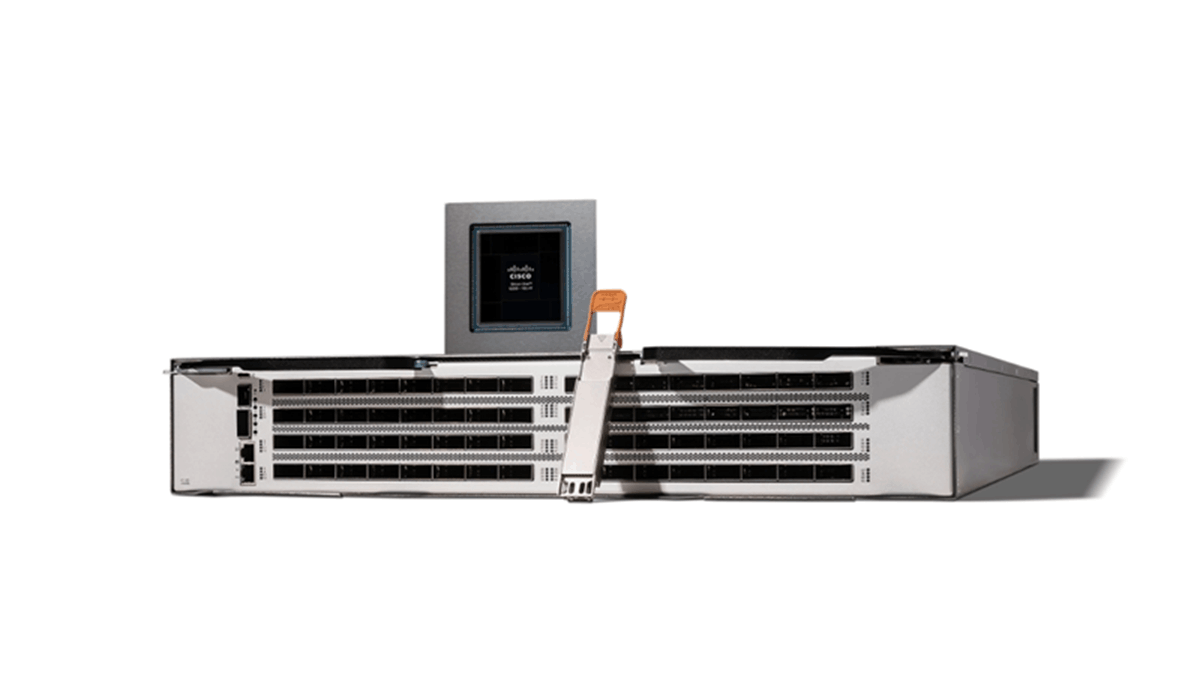
The Silicon One G300 processor powers the new N9000 and 8000 systems engineered for large, distributed AI clusters supporting training, inference, and real-time agentic workloads. The design emphasizes higher utilization and deterministic traffic handling through integrated buffering, telemetry, and load balancing techniques.
Cisco also offers liquid-cooled options and high-capacity optics, which help lower power usage while fitting more bandwidth into a smaller footprint.
With new optical components, data centers can choose different connection speeds between switches, servers, and network cards. This flexibility makes it easier to design AI networks that match specific performance and energy needs.
Alongside the hardware, Cisco updated its management software. Nexus One provides a single view to monitor and operate AI networks across on-site and cloud environments, while built-in visibility helps teams understand how network performance affects AI workloads, including in locations with strict data-handling rules.
 Source: Cisco
Extending Agentic Operations Across Networking, Security, and Observability
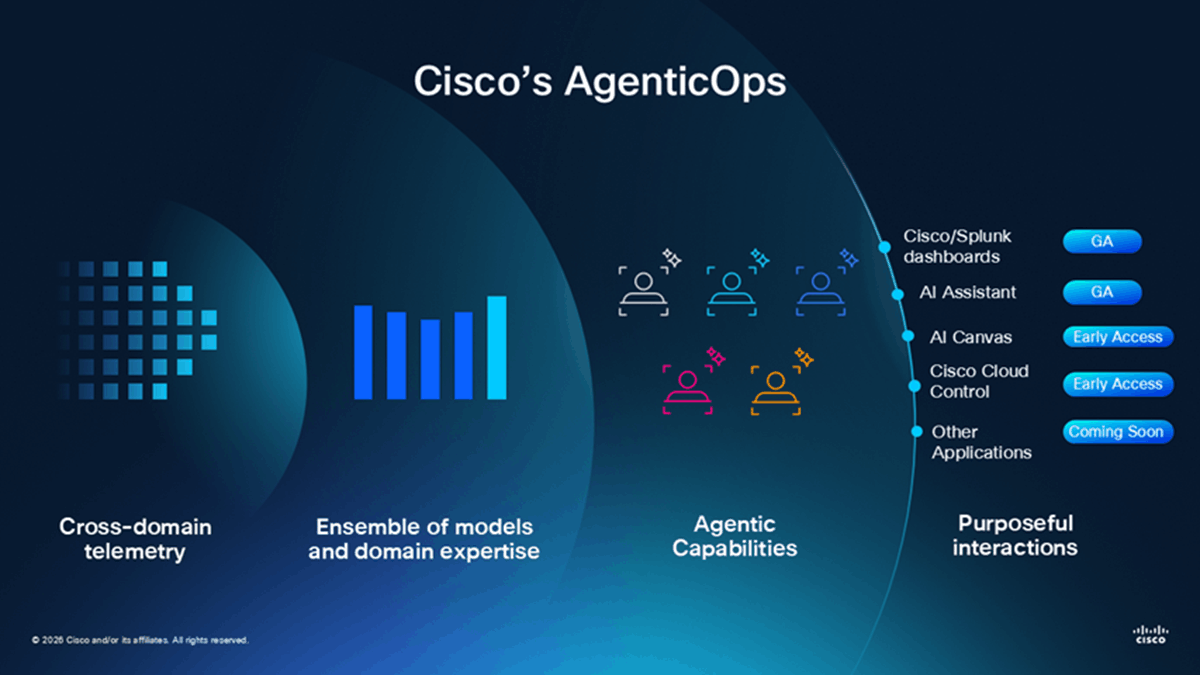
Cisco broadened AgenticOps to help IT teams manage increasingly complex environments with less hands-on effort. The updates allow automated actions to work across networks as well as within security and monitoring tools, using shared data to understand what is happening across systems in real time.
In offices, remote sites, and industrial locations, these capabilities help identify and resolve connectivity or performance issues faster, while still keeping people involved in final decisions.
In data centers, the tools can spot related events early and offer clear guidance based on how workloads behave. Similar automation is also being introduced for service providers managing large, mixed networks.
Security teams benefit through automated analysis of firewall settings, performance, and compliance status, which helps surface issues sooner and recommend fixes. Moreover, monitoring tools now track how AI agents perform, how much they cost to run, and how they behave.
 Source: Cisco
Strengthening Security Controls for Agentic AI Workflows
Cisco announced new security updates to help organizations use AI agents more safely while keeping networks reliable. These updates are designed to protect AI systems, monitor how agents interact with tools and data, and support stable connections across different environments. Enhancements to AI Defense give teams clearer visibility into their AI software components and dependencies, along with safeguards that monitor agent behavior in real time.
Additional inspection features help reduce risks tied to unsafe prompts, compromised tools, or unintended agent actions. By working with open frameworks and validated architectures, these protections can be applied in live, production environments without major disruption.
Cisco also added AI-aware capabilities to its Secure Access Service Edge platform. These features recognize AI traffic, keep performance steady during traffic spikes, and apply security policies to agent-to-tool communications. Unified policies across SD-WAN and security services make management easier as more agents are introduced.
In addition, networking software updates add post-quantum cryptographic protections and operational improvements across routing and switching platforms, supporting encrypted AI-driven communications across campus and branch locations.
Turning Agentic AI Capabilities Into Sustainable Operations
Cisco’s portfolio aligns best with organizations seeking to scale AI workloads without fragmenting operations or security. Enterprises, service providers, and regulated environments stand to benefit where consistent management, observability, and governance remain priorities.
The integrated approach suits hybrid and sovereign deployments requiring data locality and policy control.
Opportunities Created
The updates open pathways for broader AI adoption beyond hyperscale environments. Improved utilization, unified operations, and agent-aware security reduce barriers tied to cost, complexity, and risk.
The ability to correlate network behavior with AI workload performance also supports more informed capacity planning and optimization.
Potential Challenges
Adopting agentic operations introduces cultural and skills-related hurdles. Teams must adapt to new operational models while maintaining trust in automated actions.
Integration across existing environments may also require phased deployment to align tooling and workflows. Thus, clear governance frameworks and incremental rollout strategies are important to address these concerns.
Future Outlook
The announcements suggest continued convergence across infrastructure, operations, and security.
As agentic AI matures, demand will likely grow for platforms that combine autonomy with oversight. Cisco’s direction positions its portfolio toward that outcome, emphasizing scalability, control, and resilience as defining characteristics of enterprise AI networking.
Make confident decisions with research and advisory built for technology providers. Contact us to see how tailored insights can guide your next strategy.