 ·
4 minute read
The Brief: HP announced new local AI computing capabilities, spanning enterprise workstations and premium consumer PCs.
At Microsoft’s event, the company presented the first public demonstration of Windows running on the HP ZGX Fury, powered by the NVIDIA GB300 Grace Blackwell Ultra Desktop Superchip.
HP also confirmed pricing and availability for its NVIDIA RTX Spark-powered OmniBook portfolio. The HP OmniBook Ultra 16 starts at $3,199.99, while the OmniBook X 14 starts at $2,999.99; both are expected to arrive on October 16.
In addition, HP plans to introduce Perplexity experiences on eligible consumer PCs, with a one-month Perplexity Pro trial beginning in November 2026.
Find full details of the announcement about HP’s local AI computing updates at hp.com.
 Source: HP
HP Expands Local AI Computing with NVIDIA GB300 Workstations and RTX Spark PCs
Analyst Perspective: HP’s latest developments show how its personal systems business can serve customers at different stages of AI adoption. For individuals, local AI on a premium PC can support creative projects, software development, and everyday tasks. Enterprise teams, on the other hand, need systems that can handle more demanding models and inference workloads. By addressing both groups, HP can serve a wider range of AI users without forcing them into the same hardware category.
Its relationships with NVIDIA and Perplexity also give this strategy a software dimension. Powerful hardware provides the computing resources, but applications determine how easily people can put those resources to work. HP can therefore offer more than a collection of devices by connecting local computing capabilities with familiar software experiences.
The opportunity is in making each system useful for its intended audience. If HP can connect performance with clear benefits for everyday users and enterprise teams, its AI portfolio will have a stronger commercial purpose.
HP ZGX Fury Brings NVIDIA GB300 Computing to Windows
HP demonstrated Windows running on the ZGX Fury, powered by NVIDIA’s GB300 Grace Blackwell Ultra Desktop Superchip, at the Microsoft event featuring Microsoft CEO Satya Nadella and NVIDIA CEO Jensen Huang. The demonstration builds on HP’s earlier preview of its GB300 vision at Computex and brings the workstation into the Windows ecosystem.
The ZGX Fury targets developers, data scientists, researchers, and enterprise teams that build and deploy advanced AI applications. Its computing capabilities are designed to handle demanding inference workloads, support more concurrent users and AI requests, and let teams experiment with larger or more complex models. By running these workloads on-premises, organizations can keep computing closer to their data, users, and existing workflows while retaining greater control over their infrastructure.
For enterprises that need dedicated AI computing, the system offers an option for development and deployment within their own environments. HP directs interested customers to their local sales representatives for information about the Windows-powered ZGX Fury.
RTX Spark Brings Local AI to HP’s Premium OmniBooks
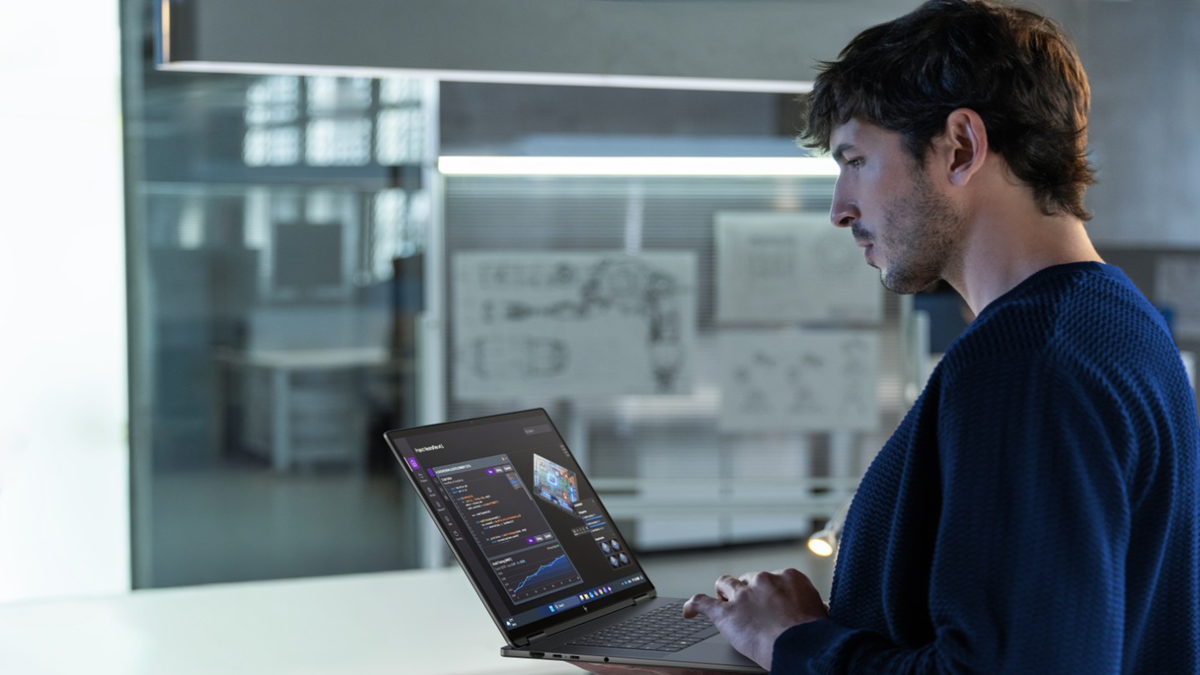
HP’s RTX Spark-powered OmniBook portfolio combines NVIDIA AI technology, RTX graphics, and unified memory in premium Windows laptops. These systems target users who want to create content, develop applications, experiment with AI models, and enjoy demanding entertainment experiences on one device. Because they can run larger models locally, users have an alternative to cloud-dependent AI workflows.
HP plans to offer two models, each with its own starting price and retail availability:
- HP OmniBook Ultra 16: Expected on October 16, 2026, starting at $3,199.99 through HP.com and Best Buy.
- HP OmniBook X 14: Expected on October 16, 2026, starting at $2,999.99 through HP.com, Costco.com, Micro Center, Walmart, and other U.S. retailers.
The portfolio brings local AI into premium personal computing, giving creators, developers, gamers, and other technically inclined users more options for running AI workloads on their own devices.
Perplexity Adds AI Assistance to HP Consumer PCs
HP plans to introduce Perplexity Computer experiences on its consumer PCs, extending a software relationship that already includes Perplexity integration on HP workstations. The offering aims to help users find information, complete tasks, and create content more efficiently.
The company will also provide a one-month free trial of Perplexity Pro on eligible consumer devices. The trial is scheduled to begin in November 2026, with availability for both new and existing devices. This gives HP an opportunity to introduce AI assistance to customers who have yet to adopt a dedicated AI service. Existing users, meanwhile, will have another way to access these tools through HP’s computing ecosystem.
The software complements HP’s hardware developments by giving customers an accessible entry point into AI-assisted work. But its value will depend on how well the experience supports users’ needs and how effectively it works alongside the local computing capabilities of their devices. The combination of AI-ready hardware and useful software could give HP a more compelling offering than hardware specifications alone.
HP Turns Local AI Into a Wider Computing Opportunity
HP’s latest developments build on its personal systems portfolio and its relationships with NVIDIA and software providers. By serving both consumer and enterprise markets, the company can address demand for local AI through devices designed for different workloads.
Developers and research teams may benefit from workstation computing, while creators and professionals can use premium PCs for local model execution and AI-assisted work.
The Cost of Making Local AI Useful
Price is still a major concern, especially for premium laptops that cost around $3,000 or more. Buyers also need to consider whether running AI directly on their computers will actually help with their daily tasks and whether their software can take full advantage of the hardware.
HP can make these decisions easier by providing clear workload demonstrations, transparent performance guidance, and accessible software support.
Where HP Goes From Here
HP’s opportunity is in turning local AI into a meaningful reason to upgrade. The ZGX Fury addresses enterprise development, while RTX Spark PCs bring AI capabilities to individual users. Perplexity adds a software entry point that may encourage adoption. As these products reach customers, performance in real workloads, software compatibility, and measurable productivity benefits will determine whether HP can translate its growing AI portfolio into sustained demand.
Transform market insights into practical strategy with expert research and analysis. Reach out to us at the Collab Collective to learn how our team can help guide your next decision.