 ·
4 minute read
The Brief: NetSpeek examines the financial impact of AV downtime and explains why organizations should measure room readiness alongside traditional uptime metrics.
The company explores how minor technical issues, such as incorrect display inputs, configuration errors, and systems that require a reboot, can generate substantial labor costs and disrupt meetings. It also analyzes how autonomous operations can reduce manual room inspections, resolve software-related issues, and help support teams identify problems that require physical intervention.
Through Lena, NetSpeek presents capabilities that include Room Check, troubleshooting, configuration correction, and natural-language interaction. The discussion proposes metrics such as room readiness before the first meeting, issues resolved before users encounter them, and technician hours spent on proactive work.
 Source: NetSpeek
NetSpeek Outlines Why AV Readiness Matters More Than Uptime
Analyst Perspective: Organizations often evaluate AV performance through equipment availability, incident volume, and repair times. These metrics provide useful operational data, but they do not fully capture the cost of maintaining meeting spaces. NetSpeek's discussion of Lena brings attention to the labor required to keep rooms functional, from routine inspections to basic troubleshooting and unnecessary technician visits.
The economic value of autonomous operations depends on how much manual work the technology can eliminate. Automated room checks and software-based corrections could reduce recurring support demands, allowing technical teams to devote more time to complex projects. However, organizations need reliable operational data to establish the savings these capabilities produce. Measuring technician hours, employee delays, and interventions avoided would provide a more complete view of the financial benefits.
For enterprise IT leaders, the opportunity extends beyond reducing support expenses. A room that works consistently supports employee productivity and gives AV teams more capacity to improve workplace technology.
Why Device Uptime Does Not Guarantee Meeting Room Readiness
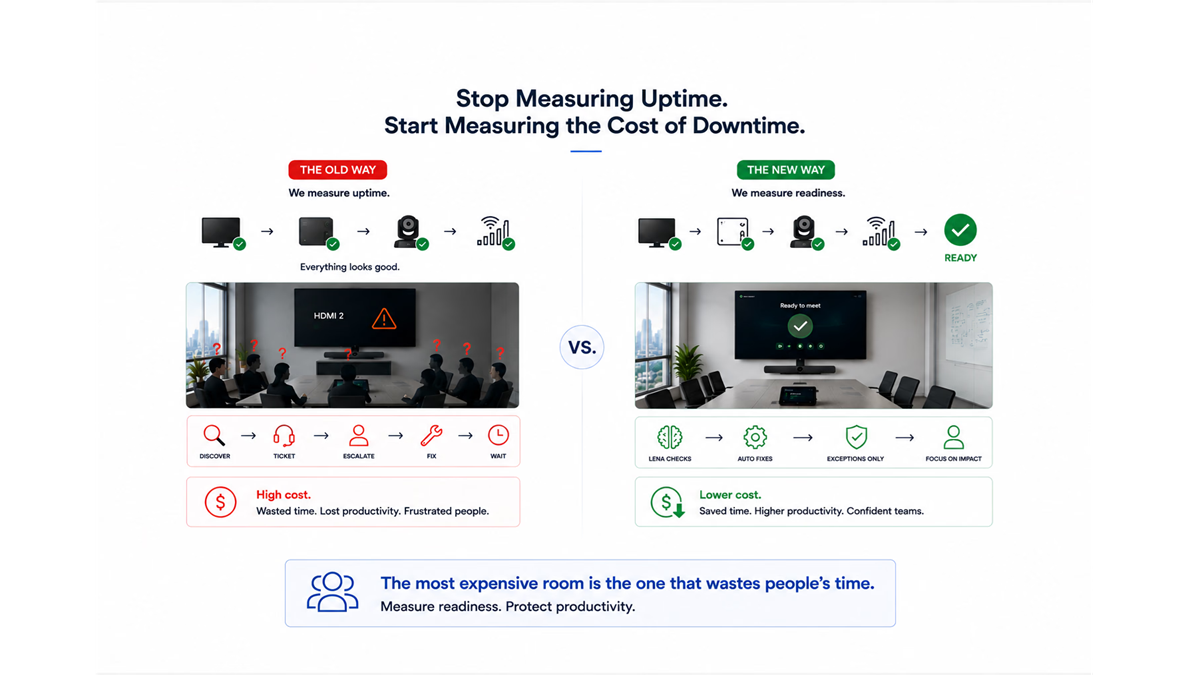
Uptime is still an important measure of AV reliability, but it does not tell the whole story. A device may stay connected even when its settings prevent employees from using it properly. For example, a display might show the wrong input, a conferencing system could remain muted, or a room might have configuration errors that prevent it from working as expected. These issues can disrupt a meeting without triggering a conventional device outage.
NetSpeek draws attention to the difference between monitoring individual devices and checking whether an entire room is ready for use. This gives IT teams a clearer way to evaluate service quality. Instead of relying on connectivity data alone, administrators can verify that rooms have the correct settings and can support their intended activities.
For enterprises, room readiness connects AV performance more directly to employee productivity. It also helps IT teams identify problems that conventional uptime reports may overlook.
How Lena Supports More Autonomous AV Management
Lena brings several AV management capabilities into an operational model designed to reduce routine manual intervention. Its capabilities include Room Check, troubleshooting, configuration correction, and natural-language interaction. These functions can help administrators determine whether rooms match their expected target states, identify discrepancies, and correct issues that software can resolve.
The system can also help distinguish problems that require remote action from those that need physical attention. This distinction gives support teams a clearer basis for prioritizing their work. Instead of inspecting every room or responding to each reported issue in the same way, administrators can direct their attention toward problems that require technical expertise or an on-site visit.
The value comes from the combined effect of these functions. Automated checks can identify problems, troubleshooting can help establish their causes, and configuration correction can address eligible faults. This workflow can reduce the manual effort involved in maintaining rooms and help technical staff manage their responsibilities more efficiently.
Measuring AV Operations Through Labor and Readiness Metrics
A more complete AV performance framework should connect room status with the resources required to maintain it. NetSpeek identifies several potential measures, including the percentage of rooms ready before their first meeting, issues resolved before users encounter them, human interventions per hundred rooms, and technician hours devoted to proactive versus reactive work.
Organizations can use these indicators to establish a baseline before introducing autonomous management. Support ticket data can reveal recurring problems, while technician schedules and service records can help quantify inspection time, troubleshooting effort, and travel between locations. Meeting-delay records can provide another measure of the disruption caused by unreliable technology.
The next step is to compare these figures after implementation. IT teams should track which problems the software resolves independently, how often technicians still need to intervene, and how much employee time they recover. This method connects operational improvements with measurable costs and helps decision-makers determine whether the investment produces sufficient financial and service benefits.
Making AV Reliability an Operational Investment
NetSpeek's discussion of Lena connects autonomous AV management with a wider enterprise need to control support costs and improve workplace technology.
Organizations with large meeting room estates may benefit most because recurring inspections, basic troubleshooting, and technician travel can consume substantial staff time. Automated checks and software-based corrections offer a way to reduce that workload while helping employees access functioning rooms.
Implementation Considerations for Enterprise IT Teams
Organizations should first establish baseline data before deploying Lena so they can measure its impact accurately. They also need to verify how reliably the system detects room discrepancies and resolves software-related issues.
In addition, successful implementation will depend on how well Lena integrates with existing AV environments and maintains consistent configurations across rooms.
Since some problems still require physical repairs, teams must also establish clear escalation procedures that direct unresolved issues to the appropriate personnel. This way, organizations can make better use of automation without compromising the quality of AV support.
Future Outlook for Autonomous AV Operations
The financial benefits will become more apparent as organizations track how many incidents they prevent, how much employee time they recover, and how often they avoid manual intervention.
NetSpeek's emphasis on room readiness gives businesses a clearer way to measure these improvements. If autonomous management can consistently resolve common issues before they disrupt meetings, AV teams can devote less time to routine maintenance and more to improving workplace technology and the experiences it supports.
Position your event or publication with perspectives that resonate across the industry. Contact us at the Collab Collective to learn how our experts can support your media coverage or speaking lineup.