 ·
3 minute read
·
3 minute read
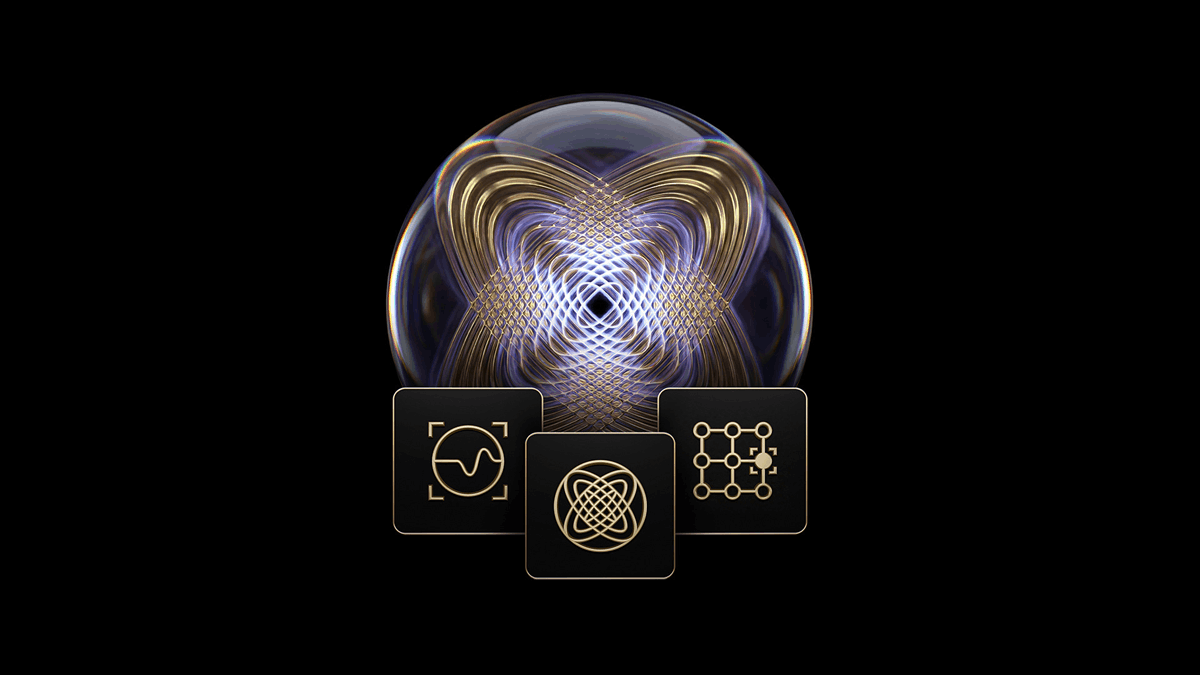
The Brief: NVIDIA introduced the Ising family, which is a set of open AI models designed to improve quantum processor calibration and quantum error correction. These models deliver up to 2.5x faster decoding and 3x higher accuracy than traditional methods, helping to address key barriers to scaling quantum systems.
The Ising portfolio includes tools for automated calibration powered by a vision-language model, along with real-time error correction enabled by optimized neural networks. Adoption is already underway across academic institutions, national laboratories, and quantum enterprises, reflecting growing interest in AI-driven approaches to quantum system development.
NVIDIA also offers workflows, training data, and microservices to support customization and deployment, with the models integrating into CUDA-Q and NVQLink to enable hybrid quantum-classical systems and real-time control.
Explore the full details of the NVIDIA Ising announcement at nvidianews.nvidia.com.
NVIDIA Launches Ising Open AI Models for Quantum Error Correction and Calibration
Analyst Perspective: The Ising launch highlights NVIDIA’s focus on operationalizing quantum computing through AI-driven processes. Calibration and error correction have long been bottlenecks, and embedding intelligence directly into these workflows shifts how systems are managed and optimized.
NVIDIA’s emphasis on open access introduces flexibility that aligns with enterprise requirements. Organizations can adapt models to specific hardware architectures, which is essential in a fragmented quantum landscape where standardization remains limited.
Another notable aspect is the ecosystem alignment. By supporting a wide range of institutions and enterprises, NVIDIA strengthens its role as an infrastructure provider rather than a single-solution vendor. This positions the company to influence the evolution of quantum development environments over time.
Open Models Target Core Quantum System Functions
The NVIDIA Ising model family introduces a structured approach to two essential aspects of quantum computing operations.
The calibration component uses a vision language model capable of interpreting measurement data generated during quantum experiments. This allows automated responses that significantly reduce manual intervention and improve system responsiveness during runtime.
At the same time, the decoding models use 3D convolutional neural networks to handle quantum error correction. They are available in two configurations, allowing users to balance speed and accuracy based on specific workload needs. This adaptability makes them suitable for a range of use cases, especially in research settings where performance tuning plays an important role.
By focusing on these operational layers, NVIDIA provides tools that directly influence system stability and scalability, helping researchers manage increasingly complex quantum processors without relying on traditional, slower methods.
Ecosystem Adoption Reflects Broad Industry Engagement
The rollout of Ising is accompanied by early adoption across a diverse set of organizations, including national laboratories, universities, and commercial quantum companies. This range highlights the relevance of AI-driven calibration and decoding across multiple stages of quantum development.
Institutions are integrating Ising into existing research programs, applying the models to improve experimental workflows and system reliability. The inclusion of both academic and enterprise users suggests that the models are adaptable across different environments, each with unique performance requirements.
This level of engagement also indicates growing alignment between AI and quantum computing communities. As these fields converge, shared tools and frameworks become increasingly important for advancing both research and practical applications, positioning Ising as part of a broader collaborative ecosystem.
Integration with NVIDIA Platforms Expands Development Capabilities
Ising is designed to function within NVIDIA’s established computing ecosystem, connecting with platforms such as CUDA-Q and NVQLink. CUDA-Q enables hybrid quantum-classical programming, while NVQLink facilitates communication between quantum processing units and GPUs for real-time operations.
This integration allows developers to build workflows that combine simulation, calibration, and execution within a unified environment. The availability of NVIDIA NIM microservices further supports deployment, offering preconfigured tools that simplify model customization and scaling.
Additionally, NVIDIA provides training datasets and workflow templates, reducing setup complexity for teams entering quantum development. This combination of infrastructure and tooling reflects a comprehensive approach, where hardware and software components are aligned to support end-to-end quantum system development.
Positioning AI as the Control Layer for Quantum Systems
With Ising, NVIDIA is building on tools it already offers, including CUDA-Q, NVQLink, and open models like Nemotron and BioNeMo. This consistency reinforces a strategy centered on integrating AI across multiple domains, extending its role into quantum computing.
The focus on calibration and error correction addresses operational bottlenecks that limit system scalability, making the solution relevant for research institutions and enterprises working with advanced quantum hardware.
Addressing Challenges
Despite its potential, adoption may require alignment across diverse hardware architectures and development environments. Variability in quantum systems can introduce complexity when integrating standardized AI models.
These challenges can be managed through customization tools, modular deployment options, and ongoing ecosystem collaboration to ensure compatibility across platforms.
Future Outlook
The Ising release suggests a growing emphasis on AI-driven control systems in next-generation computing.
Advancements in quantum computing are creating a need for integrated solutions that connect hardware, software, and automation, and NVIDIA is positioned to support this direction as hybrid computing becomes more common.
Continued adoption across research and enterprise sectors may further validate this approach and contribute to measurable progress in scalable quantum computing.
Take your outreach further with modern storytelling that builds credibility and sparks action. Connect with us now to discover how our tailored video and content services can elevate your brand presence.