 ·
3 minute read
·
3 minute read
The Brief: Salesforce has introduced new Model Context Protocol (MCP) servers that connect Slackbot with Salesforce CRM, Tableau, Data 360, Agentforce, and supported third-party applications.
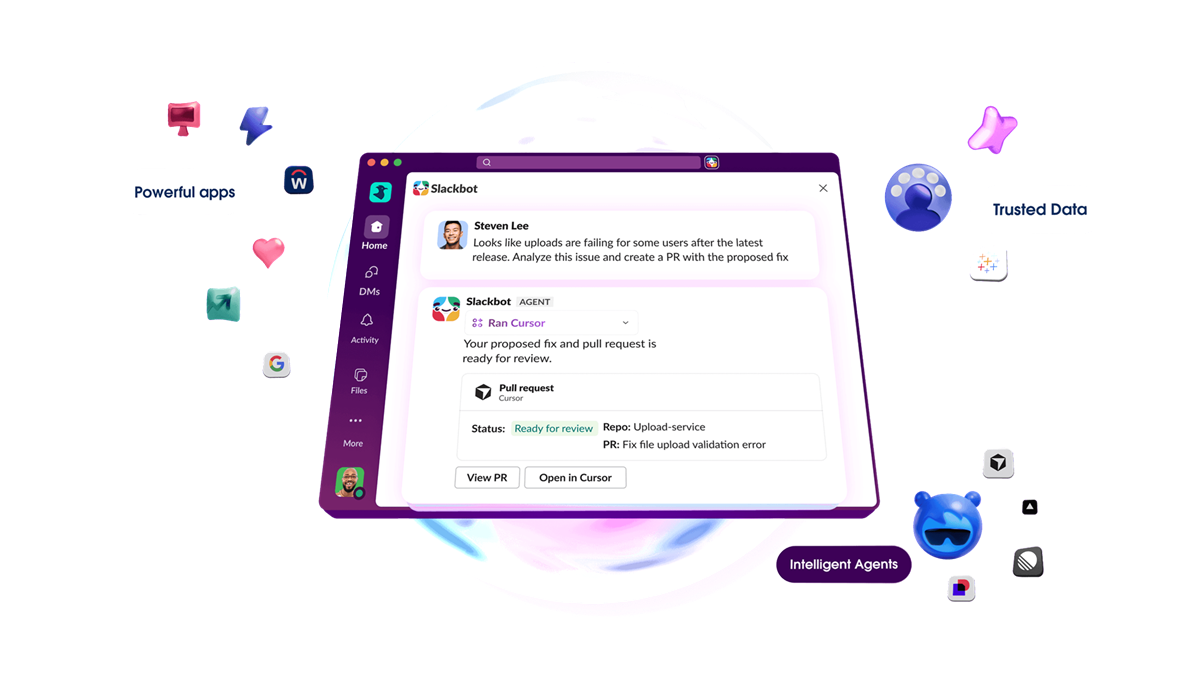
The release allows Slackbot to retrieve CRM records, surface Tableau visualizations, access unified customer profiles from Data 360, trigger Salesforce Flows, and coordinate actions across partner services such as Jira, Box, Anthropic, DocuSign, Atlassian, Zapier, and MuleSoft from within Slack conversations.
Salesforce also announced general availability for its hosted MCP servers for Enterprise Edition organizations and above, while the Slackbot MCP Client is available on Slack plans that include Slackbot. Administrators can deploy and govern these capabilities through an existing Slack-Salesforce connection without custom integration code.
Find full details of the announcement about Salesforce MCP Servers for Slack at salesforce.com.
 Source: Salesforce
Salesforce Brings MCP Servers to Slack for CRM Data and AI Workflows
Analyst Perspective: Salesforce is making Slack more than a messaging platform by turning it into a conversational workspace where business systems, enterprise data, and AI capabilities intersect. The latest MCP servers strengthen that direction by allowing Slackbot to access enterprise information that traditionally remained inside separate applications.
This development also reinforces Salesforce's long-term investment in unifying its portfolio. CRM records, Tableau analytics, Data 360 profiles, Agentforce capabilities, and external business applications now operate through a consistent conversational experience. That creates a common interface without requiring employees to navigate multiple systems for routine tasks.
The release also increases the value of previous Salesforce investments. Organizations that have spent years customizing CRM objects, workflows, and automations can expose those assets through Slack with limited additional implementation effort, which gives existing customers another way to capitalize on technology they already own while making enterprise information easier to consume during everyday collaboration.
 Source: Salesforce
Salesforce Extends Slackbot Across CRM, Data, and Enterprise Systems
Salesforce's new MCP servers give Slackbot direct access to Salesforce applications and each organization's existing CRM configuration. That means users can retrieve and update customer records, work with custom objects and fields, trigger Salesforce Flows, and complete tasks while existing validation rules and user permissions remain in place. Organizations can access many of their established business automations via natural-language requests in Slack instead of building custom integrations.
For sales teams, this enables them to review opportunities, update pipelines, approve CRM changes, and start automated workflows without leaving the conversation. Meanwhile, administrators can deploy and manage the new capabilities through the existing Slack-Salesforce connection from a single interface.
By bringing years of CRM customization into Slack, Salesforce makes business information and workflows more accessible while reducing the need to move between multiple applications.
Tableau and Data 360 Bring Governed Insights Into Slack Conversations
Salesforce is also adding dedicated MCP servers for Tableau Next and Data 360, giving Slackbot access to trusted business data directly within Slack.
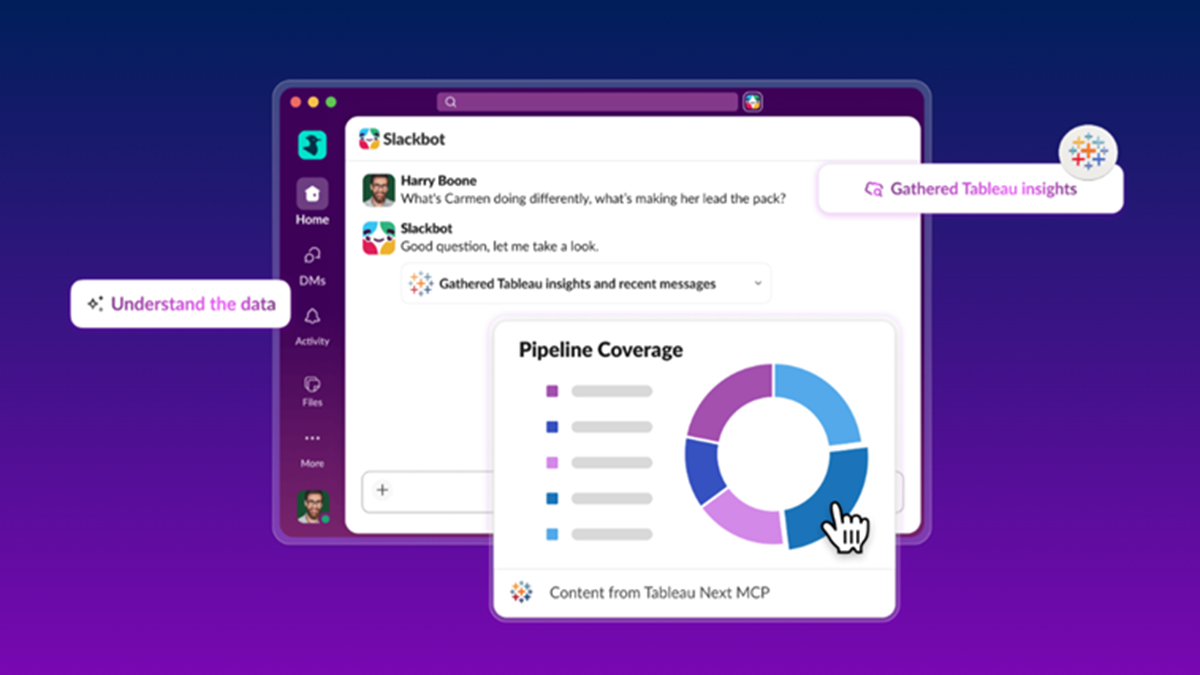
With Tableau, users can generate interactive charts and visualizations, including trend reports, heat maps, and performance breakdowns, using live organizational data.
At the same time, Data 360 provides unified customer profiles by bringing together information from Salesforce CRM and other connected business systems. This gives Slackbot more context when answering questions or carrying out tasks. Salesforce also includes Data 360 Skills, which allow Slackbot to follow predefined business processes and verification steps.
So employees can review customer information, explore analytics, share findings with colleagues, and take follow-up actions without leaving Slack. Throughout these interactions, existing permissions and data policies continue to control who can access information and what actions they can perform.
Partner Integrations Extend Slackbot Across Business Applications
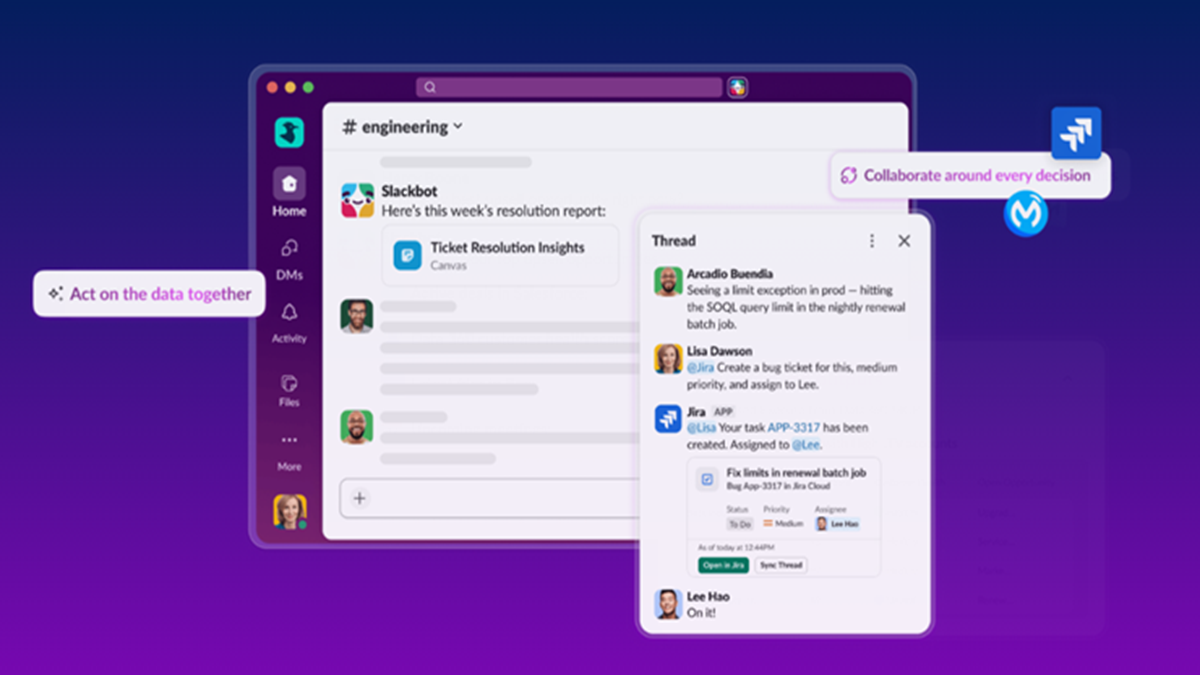
Salesforce is also growing Slackbot's capabilities by connecting it with a wide range of MCP-enabled partner applications. These include Atlassian, Anthropic, Box, DocuSign, Zapier, Lattice, Jira, and MuleSoft, allowing users to complete tasks across multiple business platforms without leaving Slack. For instance, employees can retrieve project details, access documents, request approvals, monitor APIs, or start workflows directly from a conversation.
MuleSoft Agent adds another layer of visibility by helping teams review integration assets, check API health, and receive alerts when service issues occur. Since these activities take place in shared Slack channels, everyone involved can see AI-generated actions, review completed work, and continue the conversation from the same place. This creates a more connected workspace where employees and AI agents can work alongside one another without constantly switching between different applications.
Enterprise Collaboration Gains a Larger Role in Salesforce's AI Strategy
Salesforce has spent years connecting its CRM platform with collaboration, analytics, automation, and AI tools. This latest update builds on that strategy by making Slack the place where users can access those capabilities through everyday conversations.
Organizations that already use Salesforce, Tableau, Data 360, Agentforce, and MuleSoft are likely to see the greatest value, as they can bring existing data, workflows, and AI services into Slack without deploying another standalone application.
Successful Adoption Depends on Strong Governance
While the new capabilities simplify access to enterprise data and workflows, organizations will still need clear governance policies before rolling them out widely.
Businesses should decide which customer records, business processes, and AI actions employees can access through Slackbot. At the same time, user permissions, employee training, and ongoing administrative oversight will help maintain data quality and reduce the risk of unintended actions.
Ultimately, long-term adoption will depend on how well these capabilities fit into employees' daily workflows and existing ways of working.
Looking Ahead
Salesforce's latest update moves Slack closer to becoming a unified workspace for business applications and AI. As support for additional MCP-enabled applications grows, employees may be able to access more enterprise tools, data, and automated workflows without leaving Slack.
Continued investment in this ecosystem could give organizations a more consistent way to work across Salesforce products and connected business systems while preserving the governance, permissions, and business knowledge they have already established.
Make more informed investment decisions with targeted market intelligence and analysis. Schedule a call with the Collab Collective to see how we support private equity firms at every stage.