 ·
3 minute read
·
3 minute read
The Brief: RingCentral has released its January 2026 update for AI Receptionist (AIR), bringing improvements designed to make setup faster, management simpler, and the service available to more businesses.
One key change is an automated onboarding experience that can create an AI receptionist directly from a company website, reducing the need for manual input. In addition, administrators now have a single view to manage phone numbers, call rules, and usage, with a new analytics summary that clearly tracks minutes consumed.
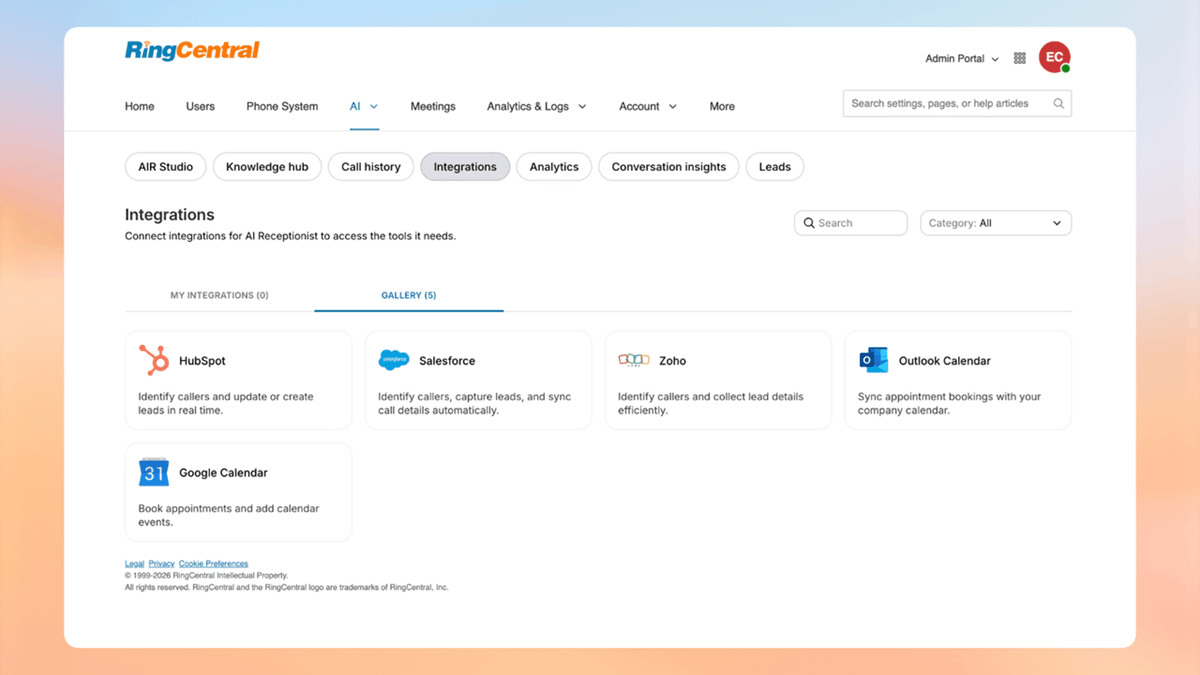
The update also introduces a dedicated Integrations tab, making it easier to connect AIR with tools like HubSpot, Zoho, Salesforce, Google Calendar, and Outlook. On top of that, lead capture can now automatically sync with HubSpot and Zoho CRMs.
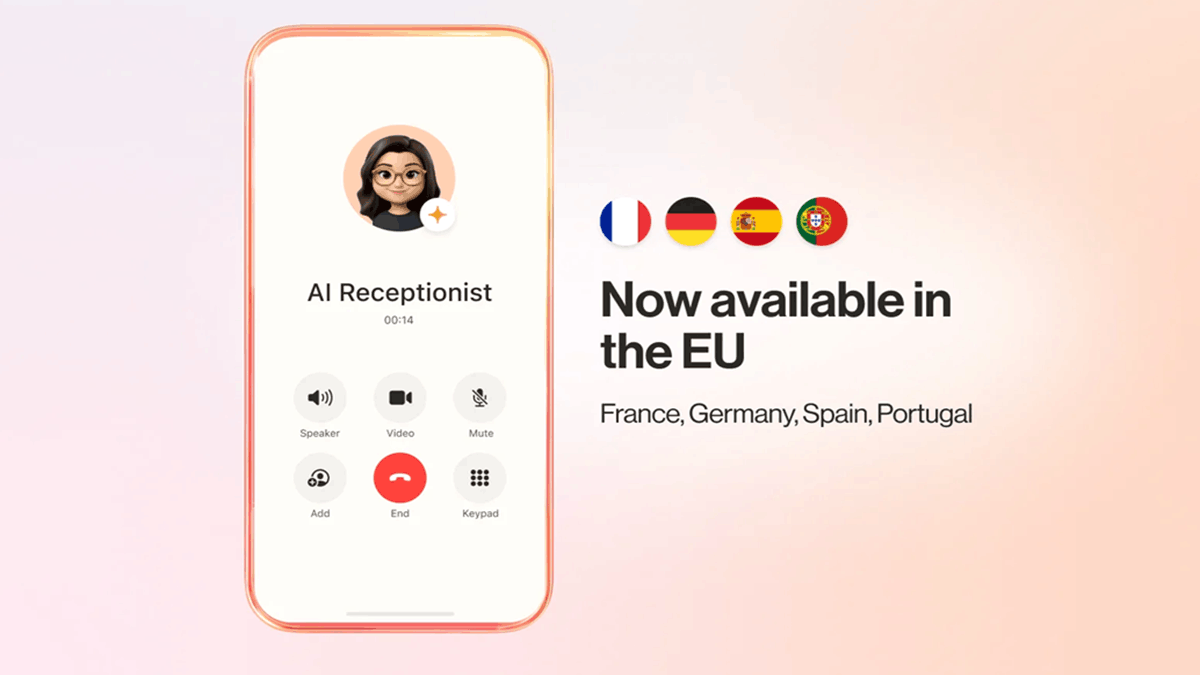
AIR also expands its language capabilities with automatic detection in several European and Latin-based languages and is now available in multiple EU countries with localized pricing.
Learn full details of the announcement about RingCentral AI Receptionist at ringcentral.com.
%20January%202026%20Release.png?width=1200&height=675&name=What%E2%80%99s%20New%20in%20RingCentral%20AI%20Receptionist%20(AIR)%20January%202026%20Release.png) Source: RingCentral
Source: RingCentralRingCentral AI Receptionist Updates Enhances Usability and Workflow Integration
Analyst Perspective: RingCentral AI Receptionist’s January 2026 release demonstrates a clear focus on reducing operational friction for organizations adopting AI Receptionist.
Through automating the initial setup, RingCentral lowers the barrier for teams to implement AI-driven call handling without requiring detailed configuration. This approach can accelerate time-to-value while promoting consistency in customer interactions.
Centralizing number assignment, call rules, and minutes usage within a single view strengthens administrative clarity, which is critical for organizations managing multiple locations or phone lines.
Moreover, the expansion of integration capabilities with CRM and calendar systems positions AIR not just as a communication tool but as part of a broader workflow ecosystem. This enables smoother coordination between front-line interactions and backend processes.
Overall, these updates indicate a strategy that prioritizes usability, operational efficiency, and cross-system alignment to support scalable AI deployment.
 Source: RingCentral
Automated Onboarding and Streamlined Administration
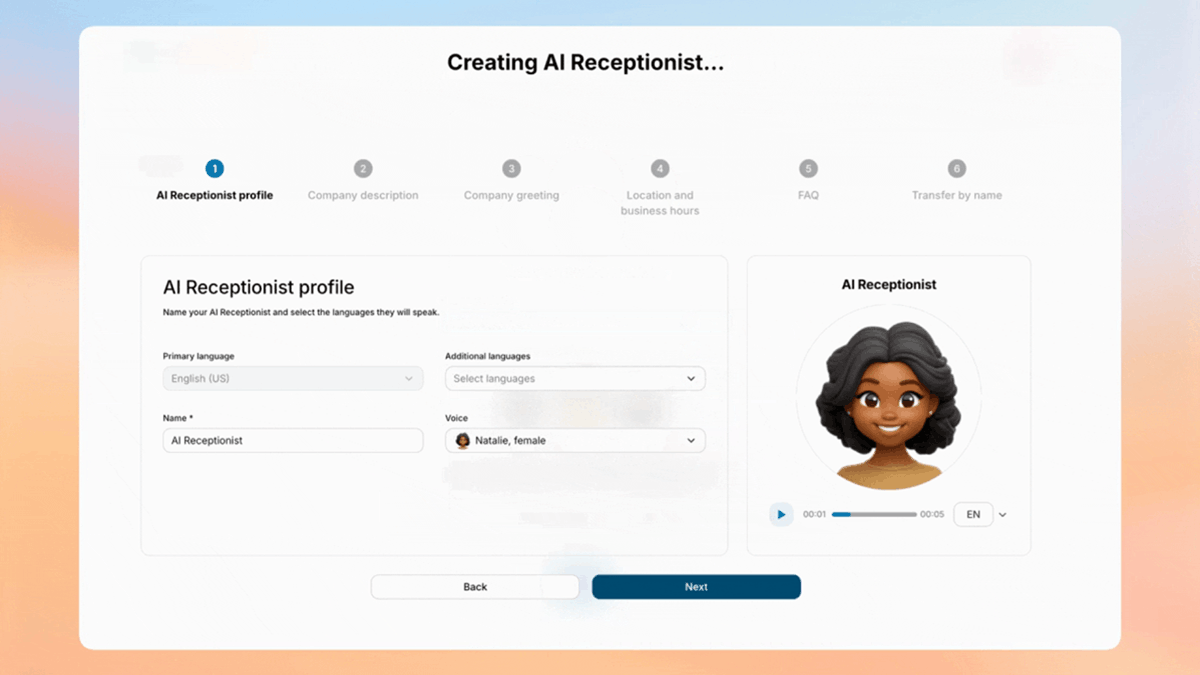
The automated onboarding feature transforms the initial interaction with AIR, allowing organizations to generate a ready-to-use receptionist profile simply by providing a business website. Hours, greetings, and common inquiries are automatically populated, shifting the focus from manual setup to customization.
Moreover, administrative clarity improves through a consolidated view of number assignments, call rules, and company locations, all accessible in one place. In addition, analytics now include a minutes summary, offering insight into usage patterns and potential cost planning.
These enhancements simplify early-stage adoption, reduce operational complexity, and streamline the journey from setup to live testing, making AIR more approachable and efficient for daily communication management.
 Source: RingCentral
Integrations and CRM-Based Lead Capture
The new Integrations tab streamlines connections with third-party tools, providing a single location to manage active integrations and add new ones efficiently. With expanded CRM support, caller responses now populate HubSpot and Zoho records automatically, eliminating the need to sift through call logs or voicemail for follow-up.
Calendar integrations enhance scheduling capabilities, linking incoming calls directly to existing workflows as well. By unifying these features, AIR ensures that call interactions seamlessly flow into downstream systems already in use, improving operational efficiency.
Altogether, the update simplifies management, accelerates follow-up processes, and strengthens the connection between incoming calls and broader business operations, making everyday administration more intuitive.
 Source: RingCentral
Language Expansion and European Availability
AIR expands multilingual support with additional European and Latin-based languages and automatic language detection during live calls. This enables natural conversations without separate lines or menu selection.
Availability now extends across several EU countries with localized pricing and usage bundles. These changes support organizations serving multilingual audiences or operating across regions.
The emphasis remains on consistent functionality across markets while maintaining a single administrative experience.
Assessing the Strategic Impact of RingCentral’s AIR Enhancements
Positioned within RingCentral’s wider cloud communications and contact center offerings, AI Receptionist extends the company’s workflow-focused approach to automated call handling.
As organizations increasingly expect automation to operate across voice, messaging, and scheduling, AIR acts as an intelligent entry point into that ecosystem. The focus on integrations and simplified administration reinforces RingCentral’s long-term approach of unifying communications rather than treating AI features as isolated add-ons.
Addressed Gaps and Customer Value
The release responds to persistent challenges such as slow onboarding, fragmented call management, and delayed follow-up after missed calls.
These improvements are particularly relevant for small and mid-sized businesses, healthcare providers, and service-driven organizations that manage high inbound call volumes with limited staff.
By reducing setup effort and improving continuity across systems, AIR supports more consistent customer engagement without increasing operational complexity.
Challenges and Mitigation
Despite usability improvements, some organizations may remain cautious about relying on automated interactions for front-line call handling. Concerns around response accuracy, escalation control, and integration governance can slow adoption, particularly in regulated or customer-sensitive environments.
These risks can be mitigated through clearer analytics, guided configuration, and stronger alignment with CRM systems, which provide visibility into outcomes and ensure accountability across workflows. Through offering transparent usage insights and structured setup flows, AIR reduces uncertainty and supports more controlled deployment.
Forward Outlook
Continued expansion of integrations, language capabilities, and regional availability positions AIR as a scalable front-line solution for a wide range of organizations.
With AI becoming more embedded in daily communication workflows, this approach reinforces RingCentral’s strategy of integrating intelligence directly into its platform rather than introducing it as a separate layer.
Over time, this foundation supports broader adoption and deeper operational reliance across industries.
Don’t miss out on practical strategies and analysis from industry experts. Subscribe to our newsletter and keep your team ahead in the evolving collaboration landscape.